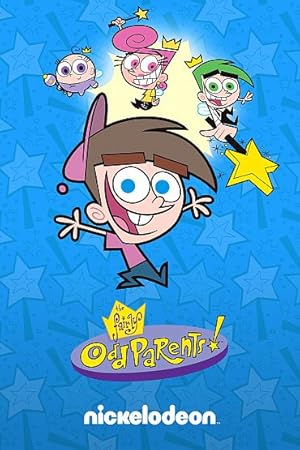
TV Series
The Fairly OddParents
Woke Score
2.5
out of 10
Series Overview
Timmy Turner, a 10-year-old boy, has had it with his babysitter! He summons his fairy godparents who have the power to grant him wishes. Some of the wishes are really helpful, others don't work out so well. Timmy's godparents Wanda and Cosmo have ideas of their own and always lead Timmy on interesting adventures.
Weekly Alert
Get the Weekly Woke Watchlist
New and trending movies scored for woke bias, preachy messaging, and forced political themes — before you waste your evening.
No spam. One useful email per week.
Season-by-Season Breakdown
Overall Series Review
The Fairly OddParents functions as a long-running exploration of childhood escapism, centering on a neglected boy who navigates the complexities of growing up through the lens of magical wish fulfillment. Throughout its run, the series remains rooted in the conventions of early-to-mid 2000s animation, relying heavily on fast-paced slapstick, chaotic humor, and the immediate consequences of impulsive decisions. The narrative consistently portrays adult authority figures as bumbling or incompetent, while maintaining a firm focus on the personal growth of its young characters rather than commenting on external societal or political issues.
A defining pattern across the series is the reliance on established character archetypes, such as the well-meaning but dim-witted father and the more grounded, albeit occasionally nagging, mother figure. While the show occasionally explores themes of responsibility and family dynamics—most notably with the introduction of Poof—it largely sidesteps modern identity politics and social lecturing. Instead, the storytelling remains anchored in a predictable, secular world where the internal logic of magic drives the plot and provides a space for lighthearted, character-driven conflict.
The series experiences an evolution in tone and character dynamics, shifting from the isolated adventures of the early seasons toward a broader focus on family and shared responsibility. By the later years, the introduction of characters like Chloe Carmichael shifts the narrative away from Timmy’s singular perspective, favoring a dynamic that emphasizes hyper-competence versus character flaws. Despite these changes, the series stays consistent in its avoidance of contemporary ideological messaging, remaining a standard, high-energy cartoon that prioritizes entertainment and the preservation of a traditional, colorblind approach to character development.
Categorical Breakdown
Identity Politics1.5/10
Oikophobia2.4/10
Feminism4.5/10
LGBTQ+1.5/10
Anti-Theism1.9/10
Weekly Alert
Get the Weekly Woke Watchlist
New and trending movies scored for woke bias, preachy messaging, and forced political themes — before you waste your evening.
No spam. One useful email per week.