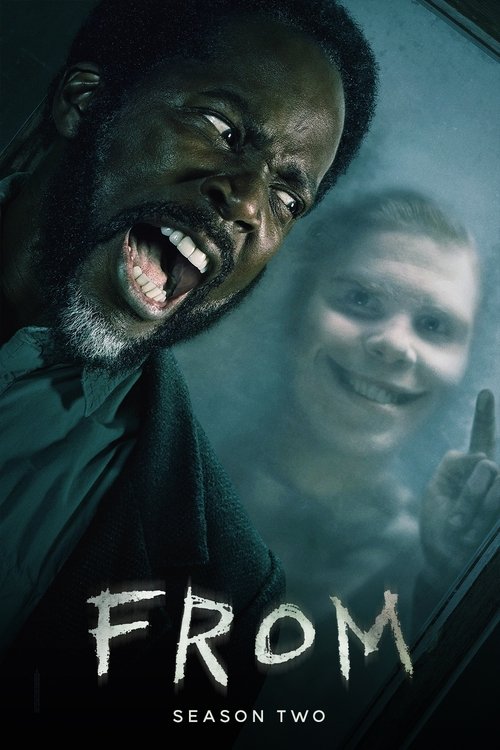
FROM
Season 2 Analysis
Season Overview
Hidden truths about the nature and terrifying origins of the town begin to emerge, even as life for its residents is plunged into chaos by the arrival of mysterious newcomers.
Season Review
Categorical Breakdown
The ensemble cast is authentically diverse across multiple races and ethnicities, but their background is secondary to their function within the plot. The narrative shows meritocracy in action as the competent Black Sheriff (Boyd) and the competent Hispanic Mother (Tabitha) are key leaders and mystery-solvers. The chief skeptic and often wrong-headed character, Jim, is a white male, but his flaw is his rigid logic in the face of the inexplicable, not his 'whiteness' or 'privilege.' There is no theme of systemic oppression or vilification of white characters based on race.
The central conflict of the series is the collective struggle to preserve the newly-formed society and its fragile institutions (the Sheriff, the town structure, Colony House) against a monstrous, external chaos. Institutions like the town's leadership and the protective talismans are portrayed as essential shields against anarchy. The narrative does not frame Western civilization or the characters' home culture as fundamentally corrupt or racist, therefore demonstrating gratitude and respect for social structure.
Female characters hold prominent and active roles, such as Donna being a pragmatic leader and Tabitha becoming a primary investigative force into the mystery. This naturally pushes the narrative toward strong women. The main male lead, Boyd, is explicitly flawed, guilt-ridden, and struggling with his own competence and traumatic past. Jim, the male engineer, is often annoyingly skeptical and wrong, contributing to the pattern of capable women versus flawed/bumbling men. The score is moderate because it strongly favors competent female characters without overt anti-natalism or a direct 'Girl Boss' lecture.
The introduction of Kristi's fiancée, Marielle, makes the lesbian relationship a sustained, central emotional arc for one of the main characters. The storyline focuses on the personal drama of their reunion, Marielle's drug addiction, and the strain of their relationship, making it a key sub-plot of the season. The sexual orientation is not merely incidental; it is a major character driver. However, the show does not incorporate didactic lectures on queer theory, gender identity, or a complete deconstruction of the nuclear family concept.
The town's mystery is steeped in metaphysical and spiritual concepts like the nature of good and evil, fate, and the meaning of belief, which is the opposite of a 'spiritual vacuum.' The supernatural horror elements inherently acknowledge a transcendent reality. While Father Khatri is no longer a major character, no new Christian or religious figure is introduced as a villain, and the concept of faith or spiritual answers remains an avenue of inquiry for the heroes. The narrative is not hostile toward traditional religion.