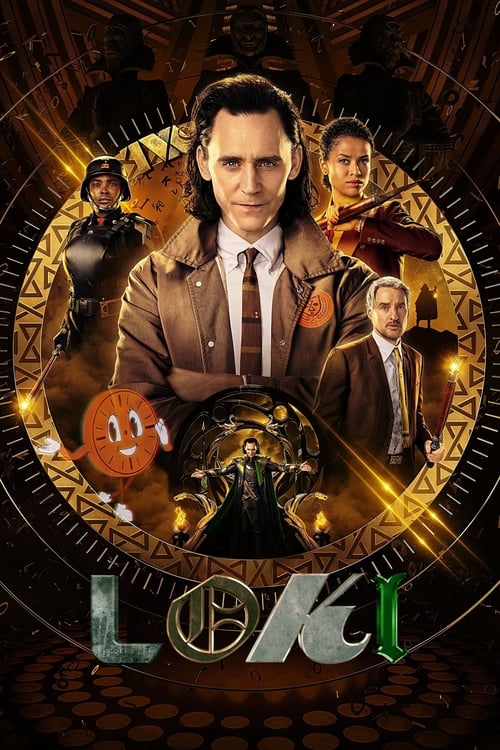
Loki
Season 1 Analysis
Season Overview
Loki, the God of Mischief, steps out of his brother's shadow to embark on an adventure that takes place after the events of "Avengers: Endgame."
Season Review
Categorical Breakdown
The protagonist's personal growth is rooted in the constant dismantling of his prior status and privilege. The narrative emphasizes his failures and forces him to learn primarily from diverse and capable female figures, Hunter B-15 and Sylvie, who demonstrate superior moral clarity and competence. There is a conscious effort to depict non-white characters in roles of authority and agency, breaking down conventional archetypes.
The show's central institution, the Time Variance Authority (TVA), which represents ultimate law, order, and 'sacred' destiny, is exposed as a totalitarian lie and a corrupt bureaucracy. The core philosophical victory of the protagonists is the violent deconstruction of this established system of 'sacred law' to achieve absolute free will, framing the institutional order as a tool for tyranny.
The most powerful and decisive character in the series is the female variant, Sylvie. She is established as a highly competent tactician who consistently demonstrates a higher level of focus and execution than the male protagonist. She drives the ultimate ideological climax of the season by killing the universe's puppet master, choosing her personal 'glorious purpose' of freedom over romantic partnership, firmly establishing her as a 'Girl Boss' figure.
The main character is explicitly confirmed as gender-fluid on his official dossier and is stated to be bisexual in a dialogue exchange, mentioning interest in 'a bit of both' princes and princesses. This makes him the franchise's first canonically non-heterosexual main character, though the majority of the focus is placed on his romantic connection with his female variant.
The entire plot is a morality play where the overarching, controlling force of the universe, represented by the Time-Keepers and the 'Sacred Timeline,' is revealed to be a manipulative, false idol. The goal of the heroes is to overthrow this ultimate 'God-like' authority and reject its predestined moral path for the sake of radical free will, directly positioning the value of subjective freedom against predetermined truth.