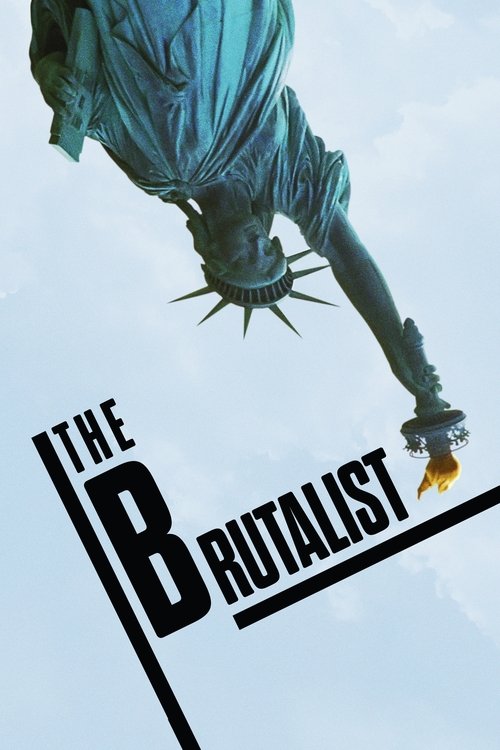
The Brutalist
Plot
When an innovative modern architect flees post-war Europe, he is given the opportunity to rebuild his legacy. Set during the dawn of the modern United States (in Pennsylvania), his wife joins him, and their lives are forever changed by a demanding, wealthy patron.
Overall Series Review
Categorical Breakdown
The entire premise centers on the persecution and exploitation of the Holocaust survivor/immigrant (László Tóth) by the wealthy, patrician, White American male elite (Harrison Lee Van Buren Sr.). The narrative focuses on 'antisemitism,' 'class,' 'inequity,' and 'Western racism' (exploitation of the Black character Gordon), establishing a clear hierarchy of oppression where the established White male is the primary vector of evil and corruption.
The movie begins with the Statue of Liberty shown upside down, symbolizing a 'warped symbol of the American dream' and explicitly functioning as an 'attack on American exceptionalism.' The plot frames the founding of modern America (the post-war era) as being built on 'capitalist exploitation' and corruption, with the wealthy Western patron representing the 'evil' at the 'basis of Western civilization.'
The central narrative focuses on the toxic and destructive power struggle between two men, the immigrant artist and the wealthy patron. Female characters, including the wife Erzsebet Toth, are primarily positioned within this dynamic and are victims of sexual violence (both homosexual and heterosexual rape are mentioned) and abuse, serving as collateral damage or pawns in the male conflict. This depiction does not present complementary gender roles or celebrate protective masculinity/motherhood.
The movie includes themes of non-normative sexual behavior, specifically mentioning 'homosexual... rape' as part of the wealthy patron's destructive abuse of power. The patron's sexuality is tied to his psychopathy and desire for control, deconstructing traditional familial structures through violence and sexual assault, positioning sexuality as a corrupted, public display of power rather than a private matter.
The movie’s central conflict is framed as a Faustian 'deal with the devil' where the architect's success comes 'at the service of evil' and involves 'moral perversity.' The narrative’s dark, pessimistic view of history and civilization suggests a moral universe defined entirely by subjective power dynamics, corruption, and nihilism, rejecting any transcendent or objective moral law.