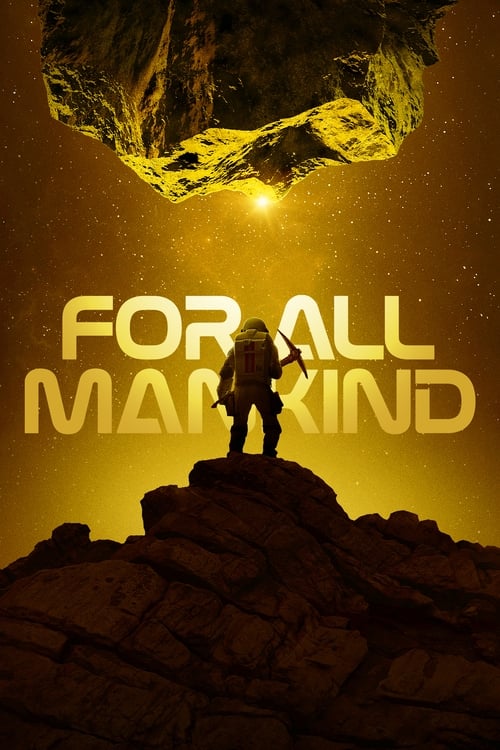
For All Mankind
Season 4 Analysis
Season Overview
Rocketing into the new millennium in the eight years since season three, Happy Valley has rapidly expanded its footprint on Mars by turning former foes into partners. Now 2003, the focus of the space program has turned to the capture and mining of extremely valuable, mineral-rich asteroids that could change the future of both Earth and Mars. But simmering tensions between the residents of the now-sprawling international base threaten to undo everything they are working towards.
Season Review
Categorical Breakdown
The plot shifts toward a Marxist-adjacent focus on class warfare, framing the Martian base through an oppressor-versus-oppressed lens. Danielle Poole, a woman of color, serves as the primary moral authority and base commander, while white male characters are often defined by their ego, physical decline, or status as disposable labor.
The series portrays the expansion into space as an extension of corporate greed and bureaucratic corruption. Western institutions like Helios and the M7 are depicted as cold, profit-driven entities that exploit workers. However, it avoids a total vilification of Western civilization by maintaining a critical eye on the Soviet system as well.
Women occupy every major position of competence and power, including the base commander, the lead engineers, and the primary scientific minds. Ed Baldwin, the series' original male protagonist, is depicted as an erratic, aging man whose relevance is fading. Motherhood is secondary to professional and scientific pursuits, with characters often leaving family behind for the frontier.
The show continues to treat alternative sexualities as a standard and unremarkable part of the professional environment. While this season lacks a central 'coming out' plotline like previous years, it maintains a commitment to inclusive casting and normalized queer relationships within the Martian colony's social fabric.
Religion is almost entirely absent from the Martian colony, creating a spiritual vacuum where science and secular ethics are the only guiding forces. The show depicts a world where traditional faith has no place in the future of humanity, treating religious belief as an irrelevant or extinct concept in the 21st century.