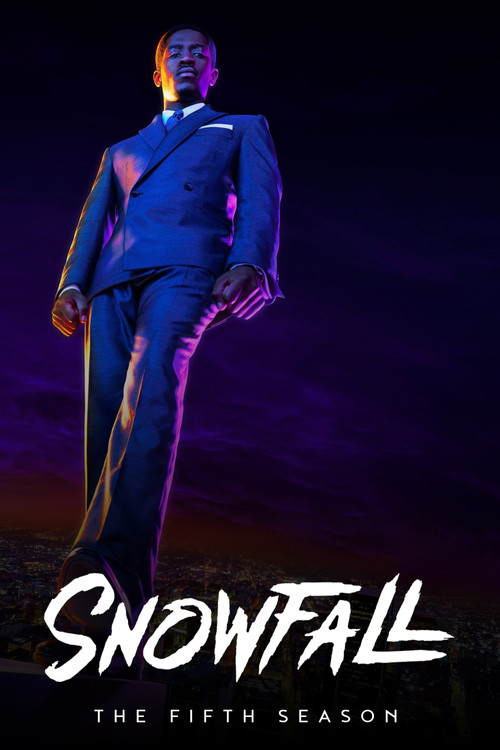
Snowfall
Season 5 Analysis
Season Overview
Set in the summer of 1986, Franklin Saint and his entire family are rich beyond their wildest dreams, on the verge of having everything they've ever wanted... right as the ground begins to fall out from under their feet. The sudden and tragic death of basketball star Len Bias makes the rock cocaine epidemic front-page news, the target of both Democrat and Republican lawmakers. Law enforcement is on a warpath and the militarization of the L.A.P.D. continues as police and politicians decide the only way to deal with this growing scourge is through force - and the creation of the new C.R.A.S.H. (Community Resources Against Street Hoodlums) units. The streets of South Central Los Angeles have never been so dangerous as the Saint family navigates the police, the warring gangs and the CIA.
Season Review
Categorical Breakdown
The narrative frames the crack epidemic as a deliberate act of systemic oppression by white-led government agencies. Characters are motivated almost exclusively by their racial identity and historical grievances.
The show portrays the United States government and its institutions as inherently predatory and corrupt. There is no sense of national pride, only a focus on the country's failures and sins.
Louie aggressively asserts her dominance in the drug trade, frequently emasculating her husband and prioritizing her own power over family unity. She adopts the 'girl boss' archetype by demanding leadership.
The season avoids modern gender ideology and keeps sexual orientation secondary to the main plot. It focuses on 1980s street dynamics without the forced inclusion of contemporary queer theory.
Faith and religious institutions provide no moral anchor for the characters. The world is depicted as a spiritual vacuum where characters define their own morality based on survival and success.