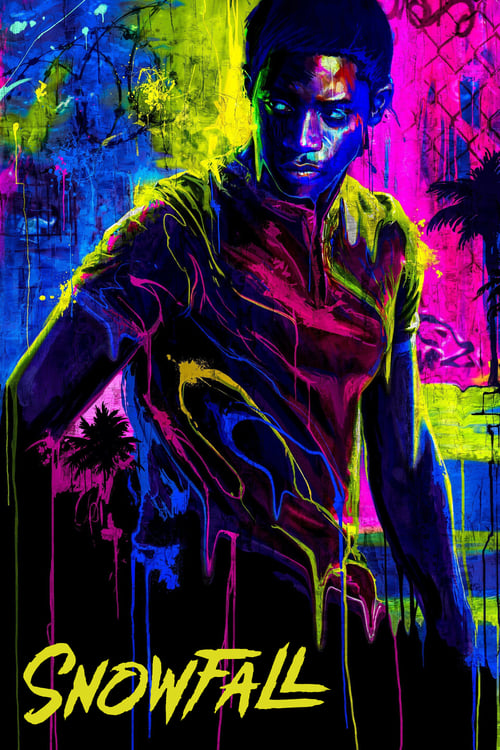
Snowfall
Season 4 Analysis
Season Overview
In season four, Franklin tries to regain control over his business.
Season Review
Categorical Breakdown
The narrative is built entirely around intersectional power struggles. It frames the drug epidemic as a targeted assault by a white-dominated government against Black communities. Characters are defined by their race and their status as either oppressors or victims of a systemic hierarchy.
The series portrays the United States government, specifically the CIA and the Reagan administration, as an evil entity that destroys its own citizens for geopolitical gain. It suggests that American values and institutions are fundamentally fraudulent and predatory.
Female characters like Louie and Cissy transition into positions of absolute authority and ruthlessness. They often appear more competent and strategic than the men around them, who are frequently depicted as physically or emotionally broken.
This season maintains a focus on the drug trade and political conspiracy rather than sexual identity. It avoids the heavy-handed insertion of queer theory and remains largely focused on the central crime narrative.
The show treats morality as a fluid concept shaped by power and survival rather than objective truth. Religious influence is depicted as a weak or irrelevant force in the face of the material reality of the streets and the cold calculations of the state.