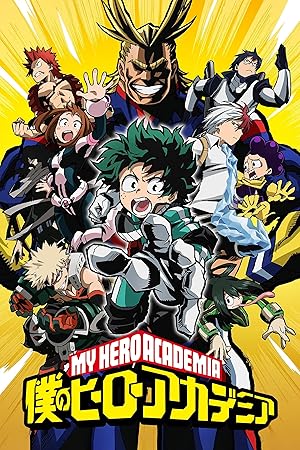
My Hero Academia
Series Overview
In a world populated with superhumans, the superhero-loving Izuku Midoriya is without power. However, after the Quirkless dreamer Izuku inherits the powers of the world's best superhero, All Might, his hopes of becoming the top hero are now possible. Once enrolled in the high school for heroes, U.A., Izuku soon discovers being a hero is much more complicated than it appears.
Get the Weekly Woke Watchlist
New and trending movies scored for woke bias, preachy messaging, and forced political themes — before you waste your evening.
No spam. One useful email per week.
Season-by-Season Breakdown
Season 1
For his entire life, Izuku has dreamed of being a hero—an ambitious goal for anyone, but an especially challenging one for a boy without superpowers. That’s right: in a world where 80% of the population has some sort of special Gift, Izuku was unlucky enough to be born completely normal. But that won’t stop him from enrolling in one of the most prestigious hero academies in the world to learn what it truly means to be a hero.
View Full Season AnalysisSeason 2
U.A. High School's most prestigious event begins: the Sports Festival, an opportunity for aspiring heroes to showcase their skills to both the public and potential recruiters. However, the path to glory is never easy, especially for Izuku Midoriya, who must now face off against his talented classmates to prove his worth to the world.
View Full Season AnalysisSeason 3
Summer is here and the heroes of Rooms A and B are in for the toughest training camp of their lives! A group of seasoned professionals will push the students individualities to the next level with one new challenge after another. Braving the elements of this secret location will be the least of their worries as routine training turns into a grueling fight for survival.
View Full Season AnalysisSeason 4
With All for One out of the game, the evil world is on the brink of war. Shigaraki of the League of Villains and Overhaul of the Yakuza vie for dominance of the underworld. Meanwhile, Deku finds himself in another dangerous internship with his senior Mirio.
View Full Season AnalysisSeason 5
Deku's next challenge, in order to become the "best hero," is a rivalry with Class 1-B, who also intend to prove that they are true heroes, with all their pride on the line! The students' morale is boosted by a direct confrontation that hasn't occurred since the sports festival. Meanwhile, a new "something" is about to awaken within Deku.
View Full Season AnalysisSeason 6
Along with Bakugo and Todoroki, Deku interned at the office of the No. 1 Hero, Endeavor. Working hard in an environment rich in lessons, he improved as a hero and used Black Whip, a new Quirk that was hidden within One For All.
View Full Season AnalysisOverall Series Review
Categorical Breakdown
Get the Weekly Woke Watchlist
New and trending movies scored for woke bias, preachy messaging, and forced political themes — before you waste your evening.
No spam. One useful email per week.