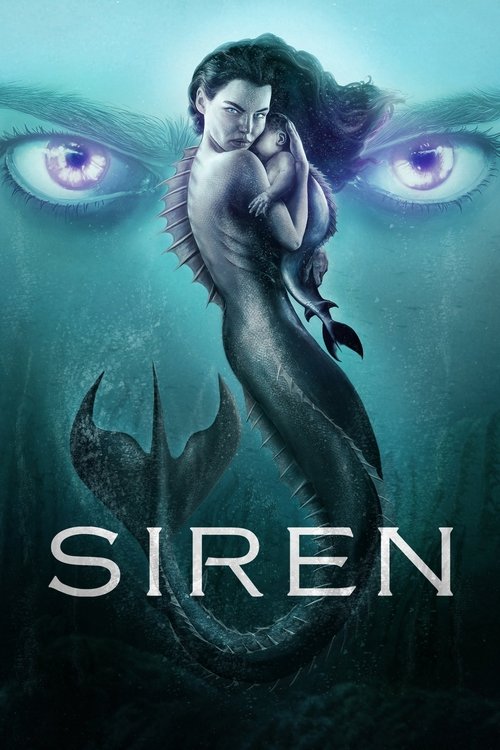
Siren
Season 3 Analysis
Season Overview
Ben’s shocking decision to let the reporter die at the end of season two has ripple effects in his relationship with Maddie and Ryn. Meanwhile, a dangerous, sophisticated new mermaid arrives in Bristol Cove, challenging Ryn’s leadership and igniting an epic undersea battle between rival tribes. All of this is complicated by the fact that Ryn’s baby, now being carried by a surrogate, must be protected at all costs.
Season Review
Categorical Breakdown
The main villain, Tia, explicitly frames her mission as uniting the mermaid tribes against humans, citing humanity's historical destruction of the planet and oceans as the reason for total war. This positions the non-human "Other" against a human species framed as the systemic oppressor and polluter. Ben, the central white male lead, is morally compromised due to his past actions, which leads to his relationship breakdown. A handsome and innovative merman, Robb, is introduced and serves as a potential new, more ethical partner for the female protagonist.
The new villain's master plan is to unite global mermaid tribes to overthrow and wipe out all of humanity, which she views as a "scourge on this planet" for its destructive actions throughout history. The human protagonists are forced to defend their civilization against a perceived justice-seeking 'Other.' The main antagonist is motivated by being experimented on by Russians, but her ultimate goal is the destruction of *all* humans, painting human civilization as fundamentally corrupt.
The core of the conflict is a power struggle between two female alpha leaders, Ryn and the antagonist Tia, in a world where mermaid society is already matriarchal. Ryn is constantly learning and becoming stronger to ensure her victory. The primary male character, Ben, is ethically compromised from the previous season, and his relationship with his partner Maddie is strained due to his actions. The military is shown as incompetent and unnecessary in the final episode. However, the season does heavily focus on Ryn's motivation being the protection of her baby, Hope, celebrating a form of fierce maternal strength.
The main romantic relationship remains a polyamorous throuple involving Ryn, Ben, and Maddie, which the narrative continues to portray in a positive, normalized light. The mermaid culture is framed as sexually fluid, contrasting with human societal constraints on relationships. The new drama comes from Ben's moral failing, not the polyamory itself. This centering of a non-normative relationship structure is a key feature of the series.
The series introduces new overt mystical elements like the merfolk 'spirit plane,' a 'spiritual journey' for Helen, and a shaman character. This focuses on an alternative, nature-based spiritual system outside of traditional religion. The core moral dilemma of the season revolves around the subjective, utilitarian choices of the main characters (Ben letting someone die), suggesting a moral relativism focused on survival and the greater good, rather than adherence to a transcendent moral law. There is no direct vilification of Christian faith.