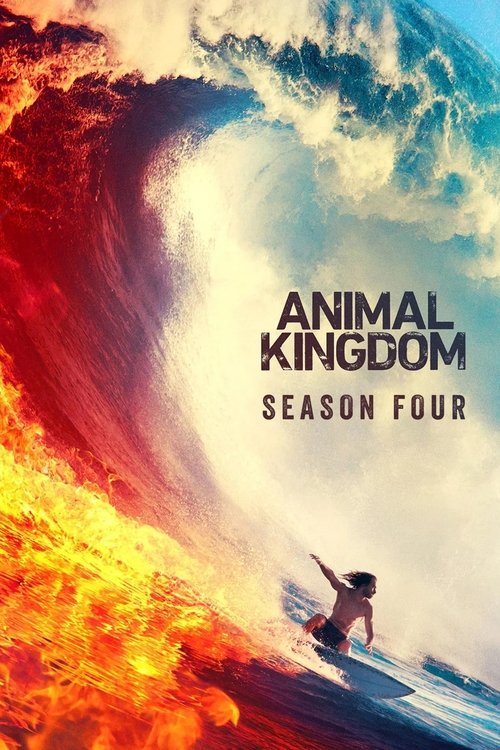
Animal Kingdom
Season 4 Analysis
Season Overview
In season four, Smurf is back on top reminding her boys who’s boss no matter whom she hurts in the process. Trapped with Smurf, Pope has found new and dangerous ways to deal with his anger, J continues to scheme about how to take over the family business, Craig plots one of their most difficult heists and Deran is worried about his future with Adrian. Outsiders move in to threaten the Cody’s fragile peace, including Angela the former best friend of J’s deceased mother and a recovering junkie, who tries to snake her way back into the family’s good graces. A new criminal crew is also introduced with a surprising connection to the Codys.
Season Review
Categorical Breakdown
The story focuses on a predominantly white criminal family and their internal dynamics. Characters are judged strictly by their criminal skill and loyalty. There is no dialogue concerning systemic oppression, privilege, or race-based grievances.
The narrative centers on a specific localized subculture of outlaws without attacking Western institutions or national history. It depicts a dysfunctional family unit but does not frame their corruption as a critique of broader Western civilization.
The series is built around a powerful matriarch who actively emasculates the men in her life to maintain control. This inversion of traditional family roles depicts motherhood as a tool for manipulation and psychological warfare, aligning with tropes that frame the traditional family as a site of oppression.
One of the four main brothers is gay, and his romantic relationship is a primary narrative arc throughout the season. The show places significant emphasis on his struggle to balance his sexuality with the hyper-masculine expectations of the criminal world, centering alternative lifestyles as a core theme.
The characters live in a total spiritual vacuum where religious faith is absent. While the show does not actively go out of its way to mock the Church, it presents a world governed entirely by moral relativism and the pursuit of power, offering no acknowledgement of higher moral laws.