← Back to Directory
The Witcher
TV Series

The Witcher

2019Action, Adventure, Drama • 4 Seasons

Woke Score
7.5
out of 10

Series Overview

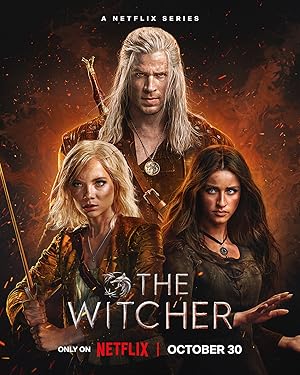
The Witcher is a fantasy drama web television series created by Lauren Schmidt Hissrich for Netflix. It is based on the book series of the same name by Polish writer Andrzej Sapkowski. The Witcher follows the story of Geralt of Rivia, a solitary monster hunter, who struggles to find his place in a world where people often prove more wicked than monsters and beasts. But when destiny hurtles him toward a powerful sorceress, and a young princess with a special gift, the three must learn to navigate independently the increasingly volatile Continent.

Season-by-Season Breakdown

Season 1

8/10

The witcher Geralt, a mutated monster hunter, struggles to find his place in a world in which people often prove more wicked than beasts.

View Full Season Analysis

Season 2

6/10

Geralt embraces his destiny as he protects Ciri from the forces battling for control of the Continent — and from the mysterious power she possesses.

View Full Season Analysis

Season 3

7.8/10

Destiny brought them together. Dangerous forces are trying to tear them apart. Geralt and Yennefer fight to keep Ciri safe as war brews on the Continent.

View Full Season Analysis

Season 4

8/10

After the Continent-altering events of Season Three, Geralt, Yennefer, and Ciri find themselves separated by a raging war and countless enemies. As their paths diverge, and their goals sharpen, they stumble on unexpected allies eager to join their journeys. And if they can accept these found families, they just might have a chance at reuniting for good...

View Full Season Analysis

Overall Series Review

"The Witcher" series presents a cynical and highly politicized dark fantasy world, consistently depicting Northern human kingdoms, organized religion, and traditional power structures as fundamentally corrupt, bigoted, and oppressive. From its beginning, the show championed powerful female leads, but the narrative focus has significantly evolved over its run. While Season 1 established a cynical, morally gray world where female figures wielded considerable power, later seasons increasingly centered character arcs around modern identity politics. A major, consistent pattern across all seasons is the deliberate deconstruction and reinterpretation of established source material characters and lore, often through extensive casting changes designed to promote ethnic diversity and normalize alternative sexualities. Identity, prejudice against non-humans, and systemic oppression are foregrounded, often overshadowing the philosophical nuance of the original novels. Consequently, complex ethical dilemmas frequently simplify into clearer battles between the protagonists and corrupt systems. The series demonstrates a clear evolution in its handling of protagonists. While Geralt was central in the early seasons, later installments often sidelined the main male protagonist, elevating female characters—Yennefer and Ciri—into the primary drivers of political action and adventure. This shift sometimes resulted in powerful female characters experiencing arcs centered on loss of power or vulnerability. Ultimately, the story focuses intensely on the "found family" unit of Geralt, Yennefer, and Ciri, who function primarily as survivors navigating and reacting against a Continent defined by systemic failure and malice. Overall, "The Witcher" is a visually impressive dark fantasy series distinguished by its unwavering commitment to critiquing established social orders, frequently prioritizing contemporary thematic resonance over strict adherence to its source material's tone or internal logic. It delivers high-stakes action alongside a continuous examination of power, prejudice, and the formation of chosen kinship against a backdrop of institutional decay.

Categorical Breakdown

Identity Politics8.3/10

Oikophobia7.3/10

Feminism7.5/10

LGBTQ+7/10

Anti-Theism7.5/10