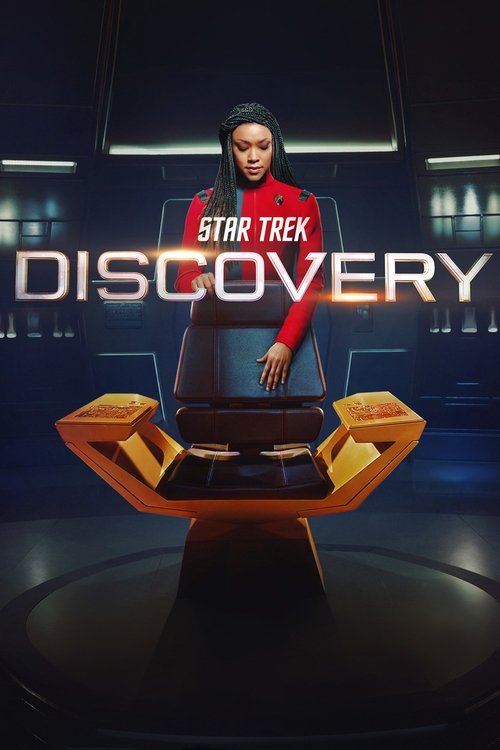
Star Trek: Discovery
Season 4 Analysis
Season Overview
After season three finds the U.S.S. Discovery crew in an unknown future far from the home they once knew, the space explorers encounter an unpredictable gravitational anomaly that could bring their journey to an end. Now living in a time filled with uncertainty, the Discovery crew, along with the help of some new friends, must work together to restore hope to the Federation.
Season Review
Categorical Breakdown
Characters are primarily defined by their demographic categories and intersectional identities. The show prioritizes diverse representation as a narrative goal, often framing leadership and conflict resolution through the lens of identity-based struggle and systemic change.
The story portrays the Federation’s historical foundations and traditions as fundamentally flawed or 'broken.' It emphasizes the need to dismantle or radically transform established institutions to satisfy modern social sensibilities.
Michael Burnham serves as a 'Girl Boss' archetype who is portrayed as morally and intellectually superior to almost every male peer. Masculine characters are consistently relegated to supportive, subordinate, or emotionally fragile roles while female characters dominate all levels of command.
The narrative centers heavily on gender ideology, including prominent storylines focused on non-binary identity and transitioning. Significant screen time is dedicated to the validation of pronouns and queer relationship dynamics, making sexual identity a central pillar of the plot.
The series replaces objective morality or traditional spiritual concepts with a mix of technobabble and emotional relativism. Faith is absent or treated as a misunderstanding of scientific phenomena, while 'lived experience' is treated as the ultimate source of truth.