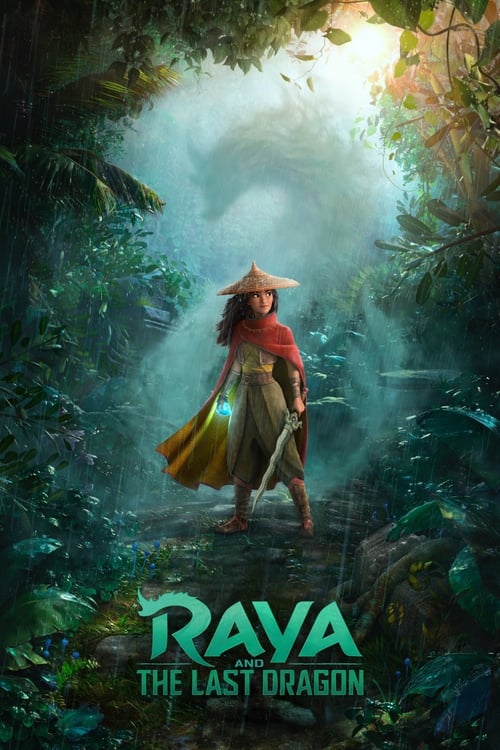
Raya and the Last Dragon
Plot
Long ago, in the fantasy world of Kumandra, humans and dragons lived together in harmony. But when an evil force threatened the land, the dragons sacrificed themselves to save humanity. Now, 500 years later, that same evil has returned and it’s up to a lone warrior, Raya, to track down the legendary last dragon to restore the fractured land and its divided people.
Overall Series Review
Categorical Breakdown
The film centers on a fantasy world inspired by Southeast Asian cultures, providing a non-Western focus for the entire cast. The plot conflict is entirely internal to the Kumandran people (inter-tribal), not a critique of 'whiteness' or Western power dynamics. Diversity is present through non-white representation, but the narrative does not lecture on privilege or systemic oppression based on immutable characteristics.
The narrative does not exhibit hostility toward its own civilization. The goal of the hero, Raya, is to restore the past ideal of a united Kumandra, viewing the ancestors and their dragon allies as a moral high point. The fault is placed squarely on the present generation's failure to trust, not a fundamental corruption of their heritage or institutions.
Raya is a highly skilled warrior, a classic 'Girl Boss' figure who carries the entire burden of the quest and actively rejects traditional romantic subplots. The main rivalry and relationship dynamic is between two female characters, Raya and Namaari. Raya's father is a loving and competent leader, and the male companion figures are supportive and distinct, preventing a universal emasculation of men, but the focus remains strongly on female autonomy and prowess.
The film contains no explicit or overt messaging regarding sexual identity, alternative sexualities, or gender ideology. The core relationships are familial (father-daughter) and platonic (friendship/rivalry). Any reading of 'queer' themes is entirely subtextual interpretation of the intense female rivalry, not an explicit element centered by the narrative.
The story's conflict is resolved through an act of profound self-sacrifice and mutual trust among the characters, aligning with a transcendent moral principle of collective good over selfish distrust. The dragon magic serves as a revered, benevolent spiritual element. The film acknowledges a higher moral law necessary for salvation and does not demonize religion or religious figures.