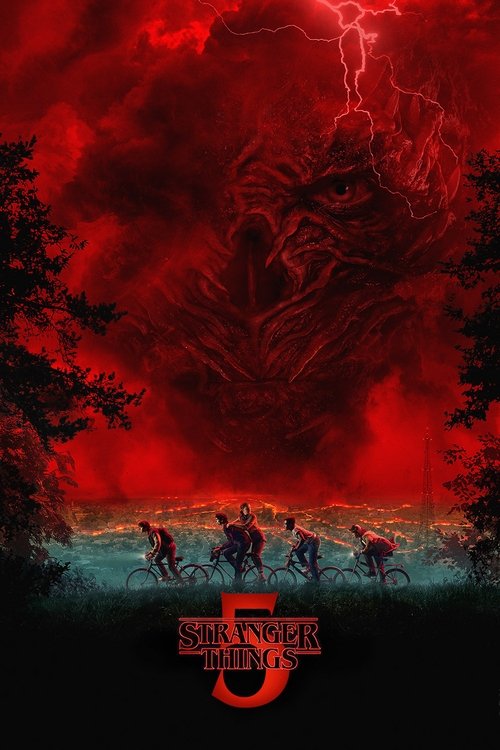
Stranger Things
Season 5 Analysis
Season Overview
The fall of 1987. Hawkins is scarred by rifts. Vecna has vanished and the government has placed the town under military quarantine, forcing Eleven back into hiding. To end this nightmare, they'll need everyone together, one last time.
Season Review
Categorical Breakdown
Characters are predominantly judged by merit and their individual ability to fight, yet the season is criticized for using 'diversity extras' and casting choices that prioritize 'body positivity'. There is a pointed scene where a lead female character is reported to use the term 'rich white douchebags' when referring to antagonists, indicating a clear intersectional lens on class and race. Black characters, Lucas and Erica, continue to play instrumental heroic roles, reinforcing a meritocratic diversity established in previous seasons. The narrative generally avoids framing the entire white male cohort as incompetent, though the shadowy military/government complex remains a principal antagonistic force.
The American military and government (Hawkins Lab) are consistently depicted as incompetent, adversarial, or actively hostile to the heroes, with Eleven forced into hiding from them. The resolution involves the government-military threat politely disappearing without a major public reckoning, suggesting a quiet disavowal of traditional institutional authority. The true antagonist remains the eldritch evil of the Upside Down, which prevents the home culture from being framed as the 'root of all evil,' reserving most of the hostility for the extra-dimensional threat.
Female leads like Eleven, Nancy, and Erica are strong, central figures of competence and power. Nancy's character arc is critiqued for sidelining her intellectual ambitions (journalism) in favor of making her a 'Rambo with boobies,' which embodies the 'Girl Boss' action trope over complementary gender roles. However, the adult female characters, Joyce and Karen, have arcs that include engagement and maternal protection, balancing the anti-natalist critique. Males are not consistently depicted as bumbling idiots; major male characters like Hopper, Steve, Mike, and Dustin retain heroic and protective roles.
Will Byers's coming out as gay is a primary emotional and plot driver for the final conflict, explicitly linked to Vecna's power. The arc centers a character's sexual identity as the key to his internal struggle and ability to defeat the villain. Robin, a lesbian character, is prominent, and her sexuality is highlighted through a public same-sex kiss and a scene where she announces her sexuality. The friends' immediate and universal acceptance, though defending it as logical for the friend group, ignores the historical reality of the 1980s setting and centers a modern sexual ideology over period authenticity.
The main conflict is a clear-cut battle between good and supernatural evil (Vecna/Mind Flayer), not a conflict that critiques or vilifies traditional religion. The morality is transcendent; good and evil are objective and absolute, lacking a focus on moral relativism or the demonization of faith-based characters. The show uses classic fantasy tropes of heroism, sacrifice, and friendship to overcome a literal demon, reinforcing objective truth in the spiritual battle.