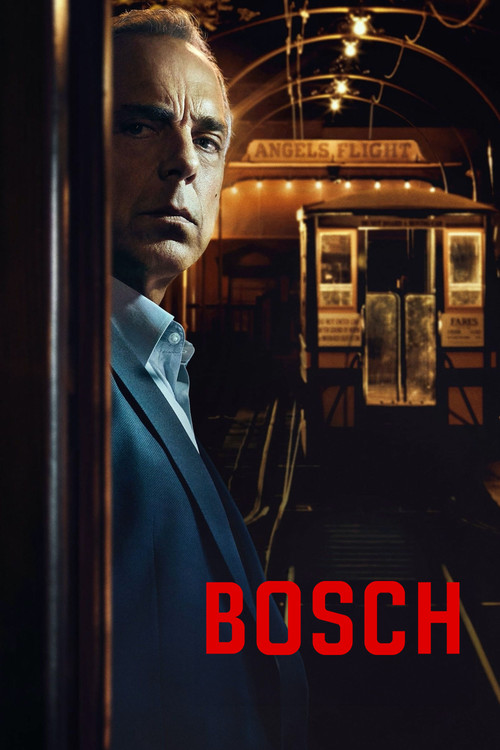
Bosch
Season 4 Analysis
Season Overview
When an attorney is murdered on the eve of his civil rights trial against the LAPD, Bosch is assigned to lead a task force to solve the crime before the city erupts in a riot. Bosch must pursue every lead, even if it turns the spotlight back on his own department. One murder intertwines with another, and Bosch must reconcile his past to find a justice that has long eluded him.
Season Review
Categorical Breakdown
The plot revolves around a civil rights lawyer and allegations of systemic police torture. It heavily features racial unrest and the legacy of the Rodney King riots. However, the narrative focuses on individual accountability and Bosch’s colorblind pursuit of justice rather than intersectional hierarchies.
The story is deeply critical of the LAPD’s internal culture and historical abuses. It depicts institutional cover-ups and bureaucratic rot. Despite this, the protagonist’s dedication to the badge and the fundamental mission of law enforcement suggests a desire to reform rather than dismantle the institution.
Female characters like Lt. Grace Billets are portrayed as competent, hard-working, and flawed. The show avoids 'Girl Boss' tropes, as these characters face realistic professional challenges and do not exist to emasculate their male counterparts. Men are depicted as highly capable and essential to the mission.
A prominent recurring character is in a lesbian relationship, and her personal life is a recurring subplot. While the show treats this as a matter-of-fact reality of her character, it does not use the storyline to lecture on gender theory or deconstruct the nuclear family.
The show is primarily secular and does not engage in significant commentary on religion. It lacks hostility toward faith or Christian characters, focusing instead on a grounded, materialistic world of crime and punishment.