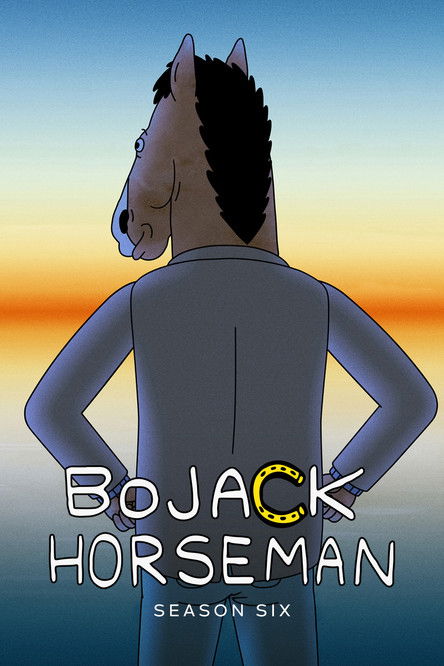
BoJack Horseman
Season 6 Analysis
Season Overview
BoJack inches his way toward redemption as a stint in rehab forces him to confront his mistakes and start making amends.
Season Review
Categorical Breakdown
The main plot is structured around the long-overdue public accountability and downfall of BoJack, a wealthy white male celebrity archetype, for abusing his power over women. The narrative centers on this power imbalance and the privilege that previously allowed him to evade consequences. The character Diane, a non-white female writer, embodies the 'intersectional lens' and delivers direct commentary against hypocrisy and superficial activism, though the focus remains on the destructive actions of the male lead.
The central setting of 'Hollywoo' is presented as a fundamentally corrupt and morally bankrupt American institution built on exploitation, abuse, and superficiality. The narrative is a scathing satire of modern American celebrity culture, a powerful and successful segment of Western society. Institutional criticism and self-hatred are directed at this cultural 'home,' which is consistently viewed as a mechanism for shielding chaos-causing bad actors from justice.
The season aggressively wrestles with toxic masculinity, concluding with BoJack facing harsh consequences while the primary female characters (Princess Carolyn, Diane, Gina, Kelsey) achieve personal growth and professional stability. The narrative actively frames the women as the competent, successful ones who 'move on and find some happiness,' embodying the 'Girl Boss' trope. Princess Carolyn's storyline portrays single motherhood as extremely stressful, showing her constantly delegating the care of her daughter to focus on her career.
Alternative sexualities are a normalized and casually centered part of the core narrative. Todd Chavez's arc focuses on his growth as an asexual (ace) person finding a fulfilling relationship outside of traditional sexual expectations. The main cast includes a stable, healthy married lesbian couple and a gay male therapist. The show consistently embraces queer identity as a positive and central component of character, though it focuses more on orientation (gay, ace) than overt gender ideology.
The show's entire philosophical backbone is rooted in nihilism, suggesting the universe is meaningless and that life is a 'meaningless struggle to find a purpose in life.' The central moral code articulated by Diane is that 'all you are is just the things that you do,' which is the definition of a secular, consequentialist moral relativism, replacing objective truth with subjective action and accountability. There is no transcendent moral law offered to guide the characters.