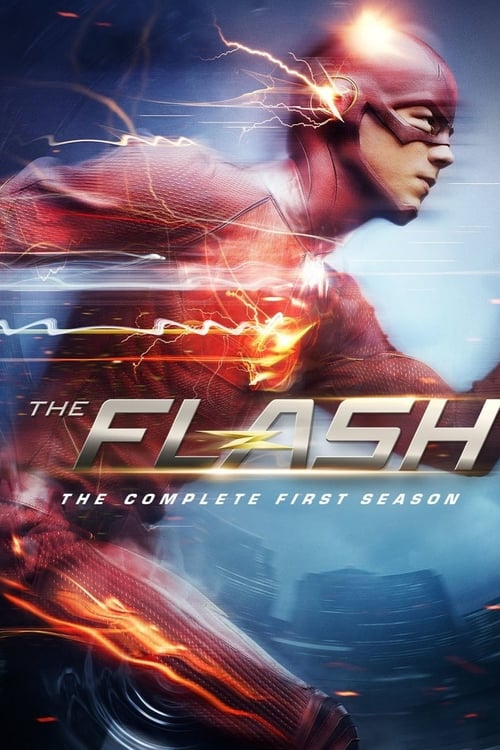
The Flash
Season 1 Analysis
Season Overview
When an unexpected accident at the S.T.A.R. Labs Particle Accelerator facility strikes Barry, he finds himself suddenly charged with the incredible power to move at super speeds. While Barry has always been a hero in his soul, his newfound powers have finally given him the ability to act like one. With the help of the research team at S.T.A.R. Labs, Barry begins testing the limits of his evolving powers and using them to stop crime. With a winning personality and a smile on his face, Barry Allen — aka The Flash — is finally moving forward in life … very, very fast!
Season Review
Categorical Breakdown
A high degree of 'colorblind' casting is present, notably with Iris West, who is race-swapped from the comics, and her father, Joe West, a highly competent, positive black detective who serves as a strong adoptive father figure to the white protagonist. The main conflict is between two white males (Barry Allen and Reverse-Flash), and characters of color are integral members of 'Team Flash' and defined by their competence rather than race, which prevents the score from climbing higher. The narrative does not lecture on systemic oppression or vilify 'whiteness.'
The central narrative pillars are the importance of the family unit, both the biological family the hero is working to clear and the strong, loving adoptive family unit that raised him. The show consistently advocates for justice, loyalty, and personal sacrifice in defense of one's city, framing established institutions and relationships as vital shields against chaos, aligning with the concept of Gratitude and Chesterton's Fence.
While female characters are present as professionals (doctor, journalist), they are often secondary to the male protagonist's story and are criticized for being underdeveloped, having significantly less dialogue, and being defined primarily by their romantic or familial relationship to the men. There is no prominent 'Girl Boss' or 'Mary Sue' trope at play, and the male protagonist is a fundamentally moral and competent hero, which does not fit the 10/10 criteria of depicting men as bumbling or toxic.
The main cast and central relationships are heterosexual and conform to the traditional male-female pairing. The presence of an openly gay, non-stereotypical police captain (a recurring character) and a wily, gay metahuman (a villain who falls into a more problematic stereotype) are noted as minor inclusions. Sexual identity is a tertiary character detail and is not centered in the main plot or used to deconstruct the nuclear family structure.
The series is built upon a classic heroic framework where morality is objective, featuring a clear-cut fight between good (The Flash's self-sacrifice and justice) and evil (the villain's selfish, murderous agenda). The conflict is one of moral absolutes and responsibility. There is no overt hostility toward religion, and faith is neither demonized nor used as a specific plot point; the foundation is Transcendent Morality (Objective Truth) through heroic action.