Outlander
Season 4 Analysis
Season Overview
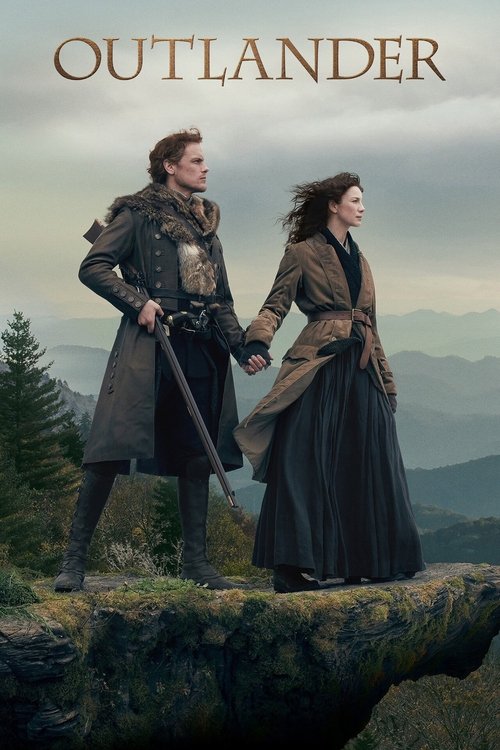
Season Four finds the Frasers in North Carolina, in a place called Fraser’s Ridge at the cusp of the American Revolution. As Claire and Jamie build their life together in the rough and dangerous backcountry of North Carolina, they must negotiate a tenuous loyalty to the current British ruling class, despite Claire’s knowledge of the bloody rebellion to come. Along the way, the Frasers cross paths with notorious pirate and smuggler Stephen Bonnet in a fateful meeting that will come back to haunt the Fraser family. Meanwhile, in the 20th century, things heat up between Claire and Jamie’s daughter, Brianna Randall and Roger Wakefield, the historian who helped search for Jamie in the past. But as they grow closer, the young couple realize they have very different ideas about the future of their relationship. However, when Roger and Brianna search for proof that Brianna’s parents reunited in the 18th century, a shocking discovery makes them both consider following in Claire’s footsteps.
Season Review
Categorical Breakdown
The narrative uses Claire, a 20th-century woman, to frame the 18th-century world through an intersectional lens, focusing explicitly on the systemic oppression of black slaves and Native Americans. The main characters consistently express morally superior positions against the historical culture's injustices, ensuring the white protagonists are philosophically on the 'right side of history.' The plot dedicates significant time to condemning the institutions of slavery and colonial dispossession.
The season sets its primary conflict against the backdrop of British colonialism and the establishment of America. Claire directly knows the outcome of the American Revolution and critiques the foundation of the new nation as a 'dream for some, a nightmare for others.' The narrative constantly juxtaposes the moral corruption and violence of the colonial society (slavery, land theft) with the nobility and victimhood of the displaced Native American tribes, framing the Western civilizational expansion as fundamentally corrupt.
Female leads Claire and Brianna are presented as powerful, highly competent, and emotionally central figures whose careers (Claire's surgery) and independent decisions supersede patriarchal norms. Jamie's masculinity is protective and complementary rather than dominant. The plot places a modern woman (Brianna) at the center of a difficult pregnancy and sexual assault trauma, which provides a complex, high-stakes portrayal of womanhood that avoids the simplistic 'Girl Boss' trope but clearly elevates the female perspective and power over traditional gender roles.
The story continues to feature Lord John Grey, a positive, recurring gay character who is a competent soldier and loyal friend to Jamie. His sexuality is present but must remain discreet due to the 18th-century setting, making it a sympathetic period-authentic representation rather than an overt ideological vehicle. The central emotional and narrative focus remains on the heterosexual, pro-family unions of Jamie/Claire and Brianna/Roger, maintaining the normative structure.
Traditional religion is not treated as a source of evil. Jamie's Catholic faith is a sincere and deep source of his moral strength, though he also respects older Celtic traditions. Religious difference (Catholic vs. Presbyterian) is shown as a cultural reality of the period. While one Jesuit priest's rigid adherence to doctrine leads to a tragic outcome, this is a critique of rigidity, not a wholesale condemnation of faith or Christianity itself. Faith is presented as a pillar of personal morality.