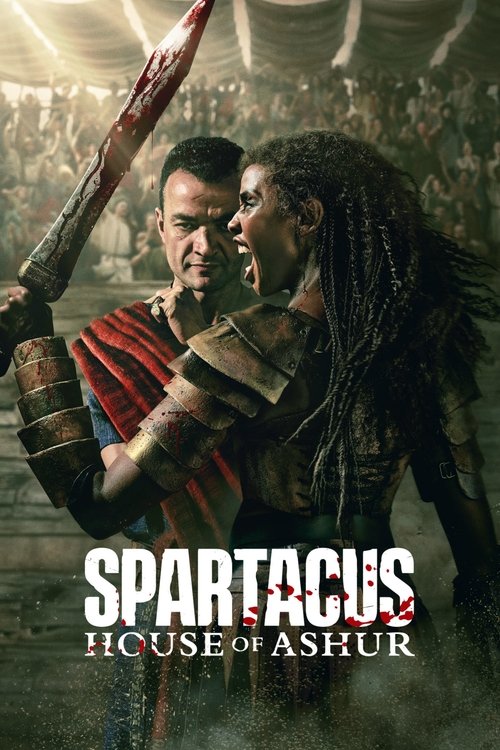
Spartacus: House of Ashur
Season 1 Analysis
Season Overview
No specific overview for this season.
Season Review
Categorical Breakdown
The narrative places a major focus on the plight of the 'other' against the dominant Roman system, using modern concepts of identity and inclusion. The show introduces a Nubian gladiatrix, Achillia, as a key protagonist and the new symbol of rebellion against Roman oppression. This choice drew direct audience criticism for checking a 'woke box,' prioritizing immutable characteristics over organic storytelling. The emphasis is on the 'immigrant experience' and class over 'ethnicity' in a way that suggests modern progressive framing.
Rome, as the primary ancestor of Western civilization, is depicted as an utterly corrupt, degenerate, and cruel empire ruled by cynical and narcissistic figures like Caesar. The institution of slavery and the aristocratic lifestyle are portrayed as sources of profound evil and moral rot. The narrative offers no respect or gratitude for any institutions, reinforcing the theme of civilizational self-hatred by framing the 'home culture' as fundamentally irredeemable.
Achillia, a female gladiator, is introduced and immediately elevated to the status of the 'Spartacus' figure—a 'Girl Boss' trope that centers a woman's competence and drive for freedom within an otherwise male arena. Although some reviews criticize the character's competence, the show’s intention to place a powerful, central female figure in a role traditionally reserved for men is clear. Other Roman female characters are noted for having a hyper-modern aesthetic (plastic surgery) that undermines the period's authenticity.
The spin-off is explicitly described as 'More Progressive' than the original series and continues the tradition of featuring explicit, non-normative sexuality where 'no parts are private'. The world of the ludus routinely deconstructs traditional male-female pairings and the nuclear family structure is absent or undermined. The overt centering and celebration of diverse sexual identity are a continuation of the Queer Theory lens established in the franchise.
The moral framework of the show is one of pure ambition, power, and manipulation. Morality is entirely subjective, with characters constantly scrambling for dominance in an amoral world. Roman paganism is present but functions only as political window dressing or as fodder for rhetorical oaths, providing no source of transcendent moral law or objective truth.