Rick and Morty
Season 6 Analysis
Season Overview
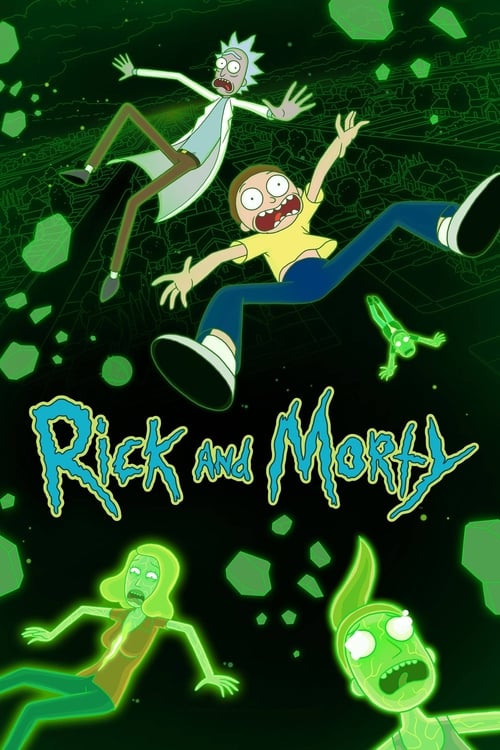
It’s season six and Rick and Morty are back! Pick up where we left them, worse for wear and down on their luck. Will they manage to bounce back for more adventures? Or will they get swept up in an ocean of piss! Who knows?! Piss! Family! Intrigue! A bunch of dinosaurs! More piss! Another can’t miss season of your favorite show.
Season Review
Categorical Breakdown
The plot does not revolve around race, intersectional hierarchy, or the vilification of whiteness. Flaws in the main, predominantly white family are universally human and existential, not based on privilege. One episode satirizes corporate culture and superhero tropes, while another criticizes a utopian alien society not based on immutable characteristics, but on philosophy.
The narrative's primary hostility is directed at the dysfunctional family unit and human civilization generally, which Rick views as fundamentally meaningless across the multiverse. The depiction of an advanced alien civilization of dinosaurs is initially a 'Noble Savage' critique of human self-governance, as world leaders willingly hand over control, though this alien society is later revealed to have its own cynical flaws.
Female characters Beth, Summer, and Space Beth are consistently portrayed as highly competent, capable of complex emotional arcs, and frequently more morally and functionally sound than Rick and Jerry. Summer takes a clear leadership role in an episode by torturing Rick, and the male leads are regularly framed as bumbling, toxic, or incompetent, fitting the emasculation trope.
The core family dynamic is deconstructed by the normalization of the relationship between Beth and her 'clone' Space Beth, which explores themes of self-love and a non-traditional sexual/romantic pairing. This pairing redefines the nuclear family structure and moves beyond traditional male-female pairings as standard.
The season fully commits to the foundational philosophical nihilism of Rick Sanchez. The genius scientist's entire worldview and trauma response are rooted in the belief that life has no objective meaning, purpose, or higher moral law because the universe is infinite. This pervasive moral relativism and spiritual vacuum are the show's consistent backbone.