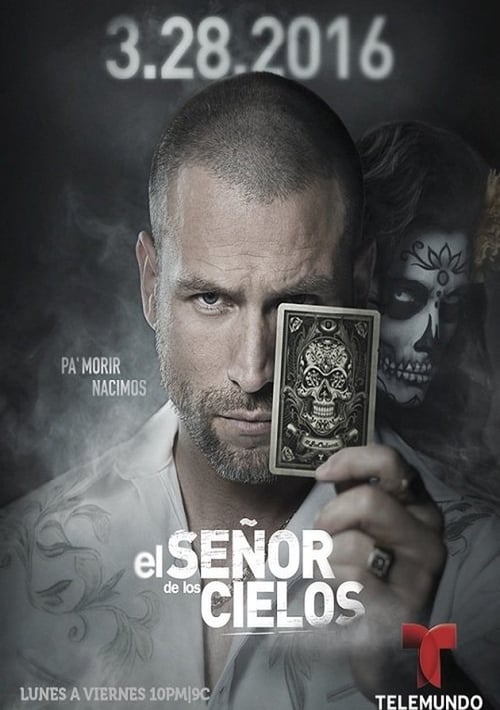
El Señor de los Cielos
Season 4 Analysis
Season Overview
No specific overview for this season.
Season Review
Categorical Breakdown
Characters are judged by their ruthlessness and capability within the cartel and political spheres. The conflict centers on power and criminal hierarchy, not on race or intersectional critiques of systemic privilege in the American or Western sense. Casting authentically reflects the Latin American setting of the drug trade.
The story depicts the institutions of Mexico—government, law, and society—as fundamentally compromised by corruption and cartel infiltration. This frames the 'home' as deeply broken by modern crime and political failure. This harsh national self-criticism is intense, though it stops short of outright demonization of the entire cultural ancestry or celebrating another culture as spiritually superior.
Female characters like Mónica Robles and the enemy Emiliana Contreras are highly capable, ruthless, and operate as criminal equals or superior tacticians to men. The narrative features a 'Girl Boss' archetype where women seek power and fulfillment through anti-social ambition in the drug trade. The male protagonist's vulnerability due to his illness further shifts the power balance.
The plot focuses on traditional, albeit morally corrupted and hyper-sexualized, male-female pairings, as Aurelio searches for a biological son from his many lovers to save his life. The narrative does not center alternative sexual identities, deconstruct the nuclear family structure, or promote gender theory.
The core of the narconovela genre is moral nihilism and the pursuit of power and wealth by a ruthless drug lord. The world operates entirely on subjective power dynamics and self-interest. There is no acknowledgment of objective moral law or transcendent truth, creating a pervasive spiritual vacuum at the heart of the show’s morality.