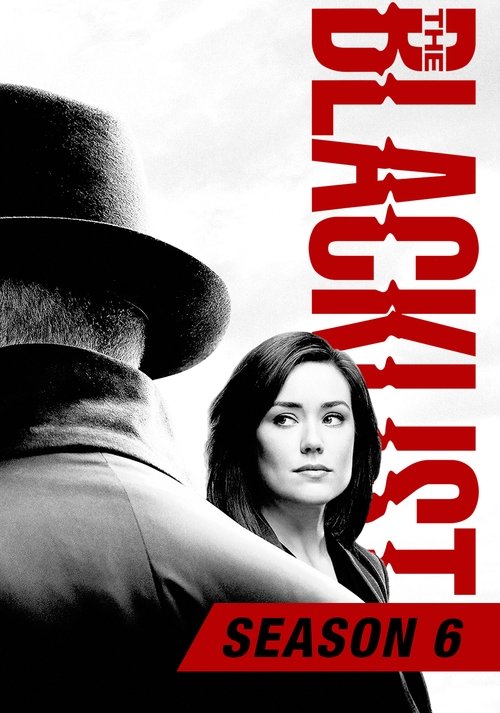
The Blacklist
Season 6 Analysis
Season Overview
Following the startling revelation that Raymond "Red" Reddington isn't who he says he is, Elizabeth Keen is torn between the relationship she's developed with the man assumed to be her father and her desire to get to the bottom of years of secrets and lies. Meanwhile, Red leads Liz and the FBI to some of the most strange and dangerous criminals yet, growing his empire and eliminating rivals in the process. All throughout, Liz and Red engage in an uneasy cat-and-mouse game in which lines will be crossed and the truth will be revealed.
Season Review
Categorical Breakdown
The season's antagonists are diverse, including an 'anti-capitalist terrorist group who kidnap and torture children of the one percent' and a 'nationalist assassin,' indicating that villainy is driven by both extreme leftist and rightist ideologies, as well as personal greed. A corrupt, non-white President is a central villain. The narrative does not focus on intersectional identity or systemic oppression but on a massive crime and conspiracy that transcends race or class.
The central political plot involves a conspiracy orchestrated by the President of the United States and his White House advisor to kill the First Lady and cover up a crime. This directly depicts the highest office in Western government as fundamentally corrupt. However, this corruption is ultimately exposed and fought by the heroic FBI Task Force, an American institution, which serves to reinforce the idea that the system itself is capable of self-correction.
The female lead, Elizabeth Keen, spends the season plotting to expose the man she once trusted, revealing a narcissistic and manipulative nature, while constantly being outwitted and needing rescue or protection from men, including Ressler and Reddington. Her dependency and flawed character arc actively work against the 'Girl Boss' trope, showing a complicated, non-perfect female protagonist. Another central female agent, Samar Navabi, is written off the show due to medical complications resulting from a near-fatal injury sustained during her work, which is a departure based on physical weakness and not promotion to a position of perfect power.
The core mystery involves the identity of the man posing as Reddington, which is revealed to be Ilya Koslov, a male character who underwent plastic surgery to impersonate another male. The overall series had a popular 'Rederina' fan theory (Katarina Rostova transitioning to Red), which utilizes the concept of identity deconstruction via a trans-human element (plastic surgery). However, the canonical Season 6 plot point is a male-to-male identity swap done for protection, not sexual or gender identity. There is no focus on alternative sexualities or political lecturing on gender theory.
Reddington's close friend and spiritual guide, Dembe Zuma, is a man of clear, traditional faith and morality, who advises Liz to 'come clean' about her betrayal based on a moral conviction. The show frequently references moral consequence and redemption, mostly through Dembe's lens, framing faith as a source of strength and moral clarity. Traditional religion is not vilified or presented as the root of evil; instead, the narrative focuses on the moral compromises of the characters.