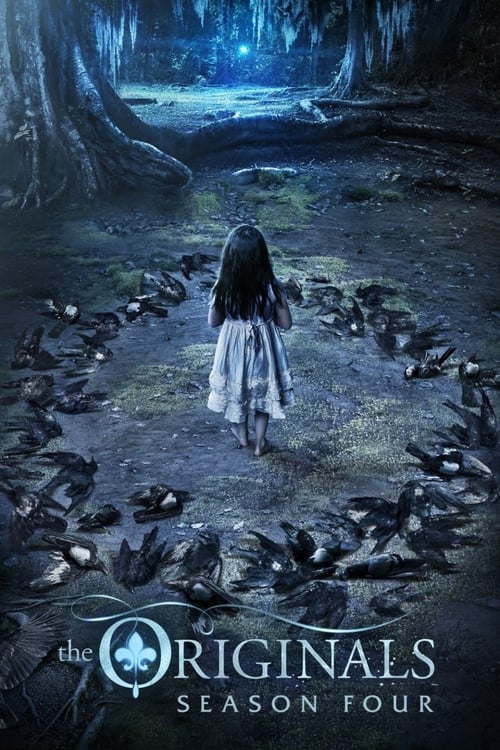
The Originals
Season 4 Analysis
Season Overview
When a dark prophecy threatens their immortal lives, the Mikaelson family faces their greatest challenge yet. After centuries of fighting to preserve their family, Klaus Mikaelson and his brother Elijah’s ruthless actions have spawned a legion of enemies. Surrounded by these enemies, the Mikaelsons enact a brutal strategy that will turn everyone against them, thus setting the course for season four.
Season Review
Categorical Breakdown
The plot focuses on species conflict (vampire vs. witch vs. werewolf) rather than human race and identity politics. The central power dynamic is subverted when Marcel Gerard, a Black male, rules New Orleans and holds the white, European patriarch Klaus prisoner. Characters are judged by their actions, emphasizing a universal, albeit dark, meritocracy. The narrative does not explicitly lecture on modern systemic oppression.
The Mikaelsons are portrayed as ruthless and morally corrupt, acknowledging a dark, violent heritage. However, the core of the show is the defense of the family unit, the 'Always and Forever' vow, and their adopted city. The family bond is viewed as the shield against chaos, not the home culture itself. The main antagonist is an ancient entity, not a force representing an outside, spiritually superior culture.
Female characters, particularly Hayley and Freya, are exceptionally powerful and drive the plot by rescuing and protecting the incapacitated male leads. This displays a 'Girl Boss' competence, but the main goal of the season is explicitly natalist: protecting the child, Hope, and facilitating Klaus's arc as a father. Female power is primarily focused on serving the central, transcendent family structure.
A significant romantic plot is established for the main character Freya Mikaelson with a new female character, Keelin. The relationship is centered and treated as equal in importance to the other heterosexual romantic pairings, moving the show away from a strictly normative structure. This inclusion is a prominent feature of the season.
The series operates in a morally relativistic universe where the protagonists commit heinous acts for the sake of the family. The concept of 'good vs. evil' is dismissed in favor of the family's self-defined moral code. The conflict is mystical (ancient magic, witches, the Ancestors) rather than spiritual, and a priest figure is shown being killed by one of the anti-hero protagonists. This atmosphere rejects the idea of objective moral law or traditional religious faith as a source of strength.