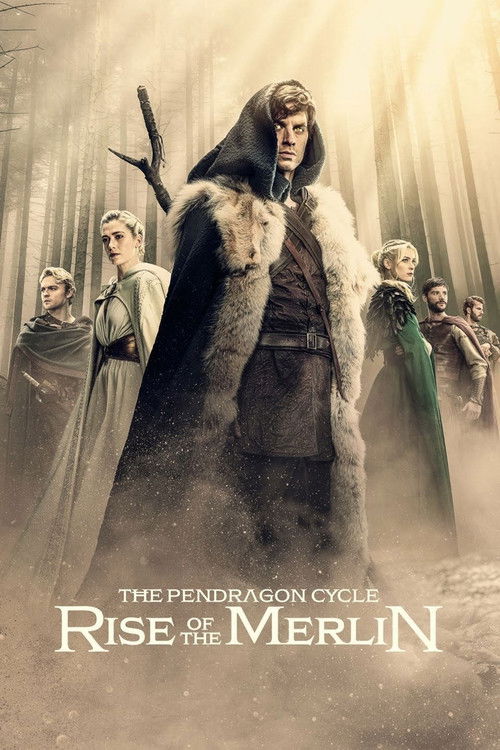
The Pendragon Cycle: Rise of the Merlin
Season 1 Analysis
Season Overview
No specific overview for this season.
Season Review
Categorical Breakdown
The narrative follows a traditional historical fantasy structure set in a specific place and time, focusing on Britons, Romans, and the mythical Atlanteans. Character merit and destiny drive the plot, not an intersectional lens. There is no historical race-swapping or narrative focus on vilifying 'whiteness'; the main conflict is drawn between cultural and religious factions and barbarian invaders. Casting aligns with the historical and fantastical context of the Arthurian legend's setting.
The plot's central goal is the defense of Britain—'the Island of the Mighty'—against foreign invaders, and the aspiration to establish the 'Kingdom of Summer.' This storyline fundamentally celebrates and seeks to protect the home culture and territory. The characters’ struggle is one of preserving a civilization, showing deep respect for ancestral lands and traditions, even while navigating a religious transition.
Female characters like Princess Charis are depicted as strong-willed, capable, and active participants in the drama, even engaging in physically demanding activities like Atlantean bull-leaping. However, their strength is not presented through the 'Girl Boss' trope of male emasculation. The narrative explicitly explores traditional masculinity through the male leads' commitment to divine purpose, and the ultimate arc leads to the birth of a king, celebrating family and lineage as vital institutions.
The story adheres strictly to a traditional and normative structure. Relationships are centered around male-female pairing, establishing the lineage for the Arthurian legend. The narrative is focused on themes of destiny, faith, and political conflict, leaving no room for the introduction of queer theory, non-traditional sexual ideology, or deconstruction of the nuclear family. Sexuality remains private and secondary to the characters' spiritual and political roles.
The core of the series is an explicitly Christian subtext, placing the Arthurian mythos within a framework of 'visceral, masculine Christianity.' The plot revolves around Taliesin's spiritual growth as a prophet and evangelist, with faith in the 'true God' being the source of moral strength, prophecy, and hope for civilization's survival. Traditional religion is framed as a transcendent moral good and a necessary defense against a mysterious, pagan, and near-satanic force.