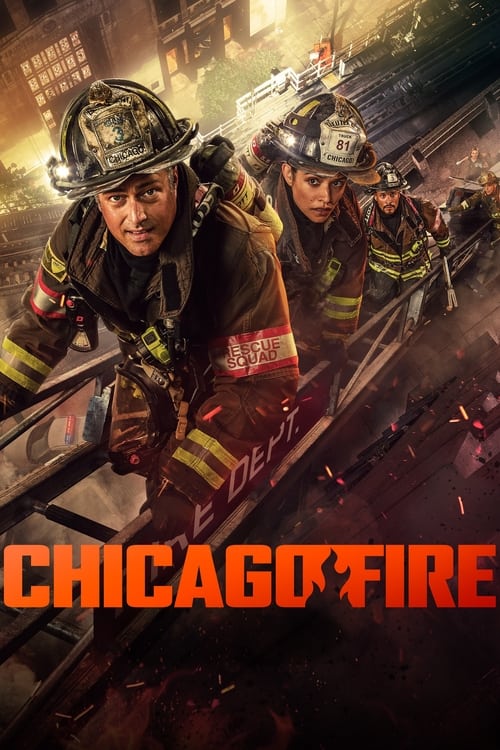
Chicago Fire
Season 13 Analysis
Season Overview
Firehouse 51 is shaken up by the arrival of new chief Dom Pascal, following the departure of Wallace Boden. The leader's abrupt methods destabilize the team as they navigate numerous crises, including a major disaster and the tragic loss of Monica Pascal, his wife. Severide and Kidd consider adoption, Violet gains more responsibility, and the group's solidarity is tested between dramas, investigations, and new challenges.
Season Review
Categorical Breakdown
The narrative gives significant screen time to identity-based programs such as 'Girls on Fire,' a career mentorship program specifically for girls, emphasizing gender identity over a universal, colorblind approach. The main cast maintains a high level of forced diversity in key roles. However, the plot does not overtly lecture on systemic oppression or vilify white characters as a group; all characters, including the new white male chief, are judged by their professional competence and personal actions.
The central theme is the solidarity of Firehouse 51, which is portrayed as a stable, high-trust institution and a 'chosen family.' The characters show respect for the firefighting tradition and the sacrifices involved in their work. The new Chief is presented as a challenge to the *leadership style* of the firehouse, not to the institution of the Chicago Fire Department or Western society as fundamentally corrupt. No significant deconstruction of American or Western heritage occurs.
Female leads Stella Kidd and Violet Mikami hold top-tier, authoritative roles as a Lieutenant and Paramedic in Charge, respectively, fitting the 'Girl Boss' trope. Kidd actively clashes with the new Battalion Chief, a male authority figure, over her program. The central plot for Kidd involves starting a family via adoption, initially favoring a non-natalist route, though this is partially mitigated by a late-season twist where Kidd discovers she is pregnant.
Firefighter Darren Ritter continues as a series regular and is an openly gay character whose romantic life is treated as a normal part of his storyline. This normalizes the sexual ideology as a standard facet of the firehouse environment. The character is integrated into the 'chosen family' structure of the firehouse, but his sexual identity does not become the dominant theme and the show avoids heavy-handed gender theory lecturing.
As a typical network procedural, the show's focus is secular-neutral, centering its morality on the job's code: courage, duty, and loyalty. Morality is generally objective as defined by the immediate need to save lives and pursue justice for victims. The narrative contains no overt hostility toward religion, specifically Christianity, but also does not use faith as an explicit source of strength for the main characters.