IT: Welcome to Derry
Season 1 Analysis
Season Overview
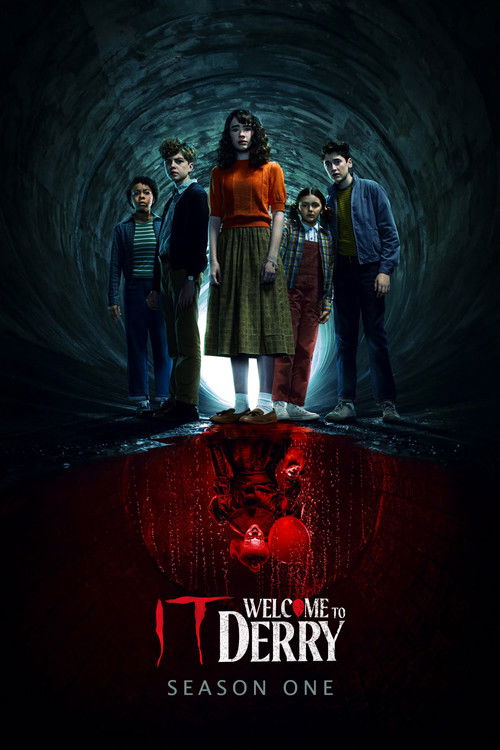
In 1962, amid a spate of unexplained disappearances of local children, a group of misfit friends begin to suspect a long-buried evil lurking. As the kids set out to determine what's really going on, a rising unease prompts several townspeople to work together to restore peace – all while a U.S. military operation seeks to exploit Derry for its own objectives.
Season Review
Categorical Breakdown
The narrative prioritizes racial conflict over supernatural horror, framing racism as the era's primary villain. Characters are defined by their intersectional identities and their struggle against "white suburbia" and systemic neglect.
The show depicts Derry and 1960s America as a deceptive facade masking a history of systemic violence and apathy. The U.S. military is cast as an arrogant, villainous institution seeking to weaponize a cosmic entity to control the populace.
Female characters are the primary voices of moral clarity, standing in opposition to the "hysteria" labels and oppressive structures of the time. The narrative elevates the "traumatized but enlightened" female trope while portraying institutional male figures as corrupt.
The show adheres to a mostly normative framework given the historical setting, though it emphasizes "misfit" bonding that favors contemporary social hierarchies over traditional ones. There is no overt focus on gender theory or sexual identity politics.
Traditional spirituality is absent, replaced by government conspiracy and secular social analysis. The moral landscape of the show is defined by subjective power dynamics rather than objective higher truth or religious faith.