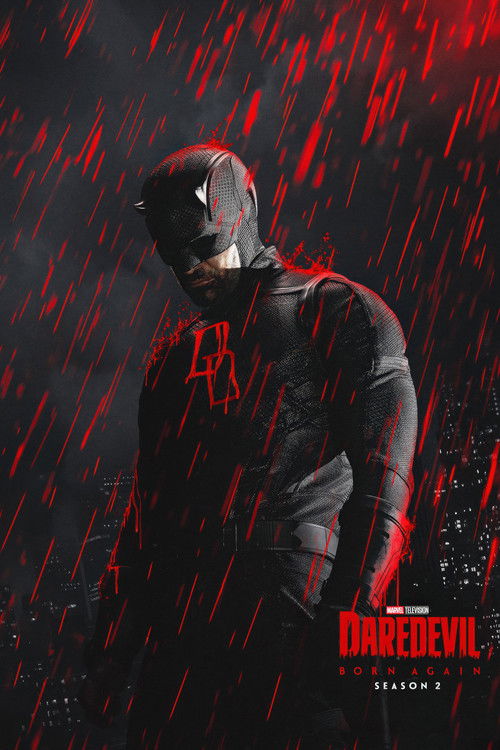
Daredevil: Born Again
Season 2 Analysis
Season Overview
Mayor Wilson Fisk crushes New York City underfoot as he hunts down public enemy number one, the Hell's Kitchen vigilante known as Daredevil. But beneath the horned mask, Matt Murdock will try to fight back from the shadows to tear down the Kingpin's corrupt empire and redeem his home. Resist. Rebel. Rebuild.
Season Review
Categorical Breakdown
The narrative explicitly utilizes Wilson Fisk as a surrogate for Donald Trump and frames the Anti-Vigilante Task Force as a direct allegory for ICE. Plot points prioritize the struggle of marginalized groups against systemic institutional power.
New York City's governing bodies and law enforcement are portrayed as an oppressive, fascist force akin to an invading army. The story suggests that traditional Western legal structures are inherently corrupt and require revolutionary rebellion to dismantle.
Female leads like Jessica Jones and Karen Page operate with total independence, often guiding or saving male counterparts. The series avoids traditional motherhood or family themes, focusing on career-driven or outlaw lifestyles.
The plot incorporates characters defined by their status in alternative identity groups, positioning them as essential allies in the fight against a normative authoritarian regime. Identity serves as a marker for political virtue.
Matt Murdock's Catholicism is significantly downplayed compared to previous iterations. He is depicted as a 'bad Catholic' who has abandoned his parish, treating faith as a private struggle rather than an objective moral authority.