House of Cards
Season 4 Analysis
Season Overview
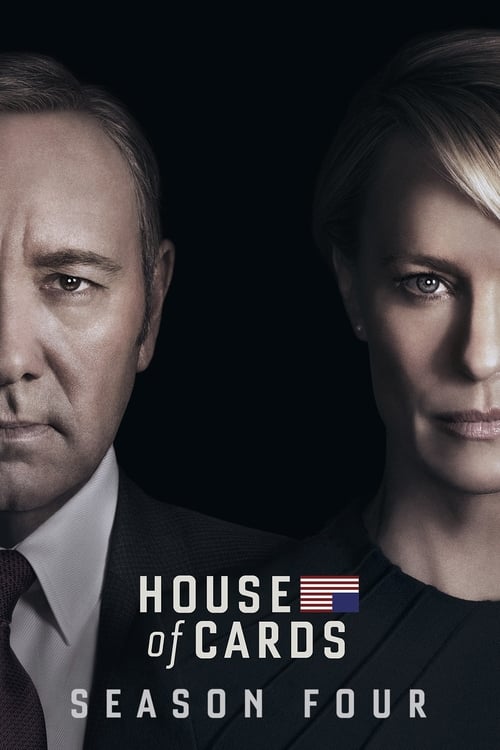
They've always been a great team. But now in season four, Frank and Claire become even greater adversaries as their marriage stumbles and their ambitions are at odds. In an election year, the stakes are now higher than ever, and the biggest threat they face is contending with each other.
Season Review
Categorical Breakdown
A key plotline involves the emergence of a scandal concerning Frank Underwood's father and a Ku Klux Klan connection, which is used to frame his Southern background as inherently racist and costs him politically. The narrative introduces a powerful African-American congresswoman, a civil rights veteran, who becomes a formidable political obstacle in Claire's path. Racial and historical grievances are directly woven into the election campaign as strategic tools for political gain, rather than focusing purely on character merit or policy.
The show consistently depicts the highest echelons of American power—the Presidency and the political system itself—as entirely corrupt, murderous, and consumed by pure ambition without any pretense of civic virtue or national good. The only successful model for operating within this system is utter amorality. The narrative frames traditional American values, such as the rival candidate's open love for his children, as a gross political facade contrasted with the Underwoods' superior, calculating ruthlessness, suggesting American institutions are shields for chaos only in the hands of the morally void.
Claire Underwood’s entire arc is a triumph of the 'Girl Boss' trope, where she demands and achieves a co-equal partnership on the presidential ticket, forcing a submissive Frank to concede his dependence on her. The storyline explicitly champions her career ambition as the only valid form of fulfillment, directly featuring a scene where Claire acidly questions a rival about regretting having children. Masculinity in Frank is depicted as weak and non-functional without Claire's influence, validating her ruthless independence as a political force.
The season reinforces the established theme of President Underwood’s bisexuality through his private grief over the death of his former male lover. His same-sex desires are not hidden from his wife, confirming the marital arrangement is deliberately outside of traditional male-female pairing. The narrative normalizes his sexual fluidity while also referencing his political alignment as 'pro-gay rights,' centering alternative sexualities as a feature of the lead anti-hero's character and a political issue to champion.
The core philosophy of the series, which permeates every plot development, is moral relativism and the 'will to power' where there is no objective moral law. The protagonist operates entirely outside of any transcendent moral code, believing only in himself. The show's established worldview is one where traditional religion, and specifically Christianity, has been rejected entirely, as epitomized by the series' previous deliberate destruction of a religious icon by the President, setting the spiritual vacuum that drives the characters' actions in the election year.