House of Cards
Season 1 Analysis
Season Overview
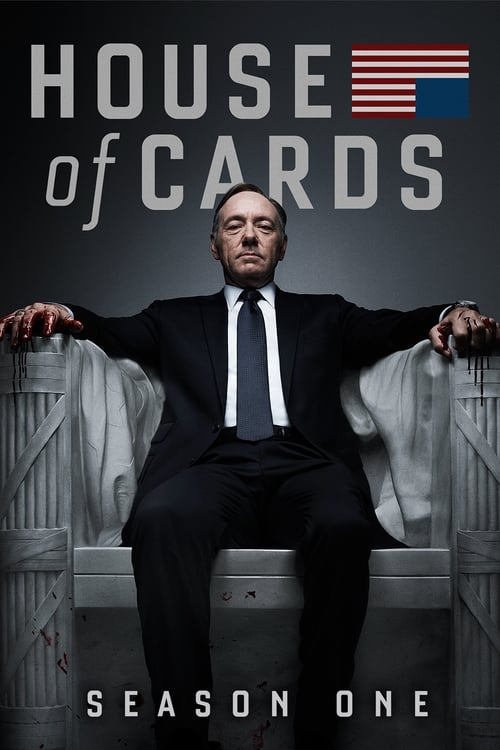
Betrayed by the White House, Congressman Francis Underwood embarks on a ruthless rise to power. Blackmail, seduction and ambition are his weapons.
Season Review
Categorical Breakdown
The narrative universally subjects all characters to the ruthless pursuit of power, regardless of their demographic group. Ambition and skill in manipulation are the only measures of merit. The primary villain is a white male, Frank Underwood, but his evil is framed as a universal condemnation of power-hungry politicians, not a vilification of his immutable characteristics. Race and social hierarchy are background elements that are used by the powerful, but the plot does not exist to lecture on systemic oppression.
The series portrays the American political system, its institutions, and its capital city as fundamentally corrupt, cynical, and rotten at its core. Washington, D.C., is depicted as a sewer of backroom deals, blackmail, and moral compromise where the public good is a tool for personal gain. There is no element of gratitude or respect for American institutions; instead, the culture of politics is shown as a shield for chaos and personal depravity.
Claire Underwood is presented as the quintessential 'Girl Boss' figure, whose primary ambition supersedes all traditional gender roles. She maintains a cold, calculating, and ruthless personality that directly resists the traditional female stereotype. The show reveals that the Underwoods' decision to be childless is a calculated political maneuver, explicitly framing motherhood as a 'prison' that would interfere with their career goals. Masculinity is not so much emasculated as it is matched by a equally potent and amoral female counterpart.
The narrative features a highly non-traditional and sexually fluid lifestyle for the main male character, Frank Underwood. His past sexual relationship with a male college friend is established in the first season, positioning him as bisexual. The Underwoods' marriage is openly non-monogamous and functions as a political-pragmatic partnership, fundamentally deconstructing the traditional, normative nuclear family structure. Alternative sexualities are centered not as a political lecture but as a natural extension of the characters' amoral power-seeking nature.
The entire moral framework of the show is based on Frank Underwood's philosophical nihilism, where objective morality is non-existent. Frank operates entirely on a set of subjective 'power dynamics,' where the only sin is weakness and the only truth is winning. He frequently speaks directly to the audience, celebrating his own amoral approach and mockery of any higher moral law, reinforcing that the world is governed by self-interest, not any transcendent truth.