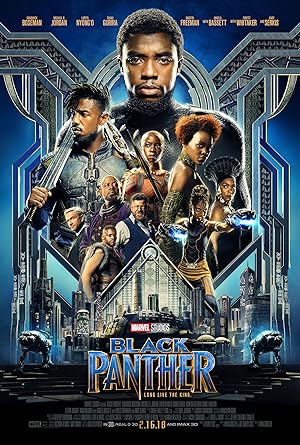
Black Panther
Plot
After the events of Captain America: Civil War, Prince T'Challa returns home to the reclusive, technologically advanced African nation of Wakanda to serve as his country's new king. However, T'Challa soon finds that he is challenged for the throne from factions within his own country. When two foes conspire to destroy Wakanda, the hero known as Black Panther must team up with C.I.A. agent Everett K. Ross and members of the Dora Milaje, Wakandan special forces, to prevent Wakanda from being dragged into a world war.
Overall Series Review
Categorical Breakdown
The plot is entirely driven by a conflict based on immutable characteristics: the deep division between continental Africans and the African diaspora resulting from historical oppression. The villain, Killmonger, exists to lecture on systemic oppression and the moral obligation of Wakanda to use its power to arm and liberate oppressed people worldwide. The hero's final decision is to abandon the 'apolitical' isolationism and embrace a policy of intervention and redistribution of resources based on this identity-driven political argument.
The film frames the isolationist policy of Wakanda's ancestors and their past King as a major moral failure and a source of national corruption, asserting that the ancestors were wrong to turn their backs on the suffering of their race in the world. The national heritage is presented as flawed and needing correction, but the unique Wakandan culture itself is not demonized and is instead celebrated as a technologically advanced society that escaped Western colonialism, reversing the 'Noble Savage' trope.
Female characters are highly dominant and perfectly competent, embodying the 'Girl Boss' trope. T'Challa's younger sister is a globally-leading technology genius, his former lover is a master spy and moral compass, and his elite guard (Dora Milaje) is comprised entirely of powerful women who are constantly protecting the King. The male protagonist is repeatedly dependent on these women for technology, advice, and physical protection, positioning them as superior in key competencies.
The movie follows a normative structure and features multiple traditional male-female pairings. There are no openly LGBTQ+ characters or any exploration of sexual identity as a theme. Planned material that would have introduced a queer element from the comic source was intentionally removed, reinforcing the traditional structure.
Wakandan religion, which includes ancestor worship and ritualistic use of a heart-shaped herb, is portrayed as a source of genuine spiritual power and moral guidance for the king. T'Challa's communication with his ancestors on the Ancestral Plane is treated with respect and provides the ultimate catalyst for his moral and political awakening. Traditional faith and spirituality serve as a vital source of strength and continuity.