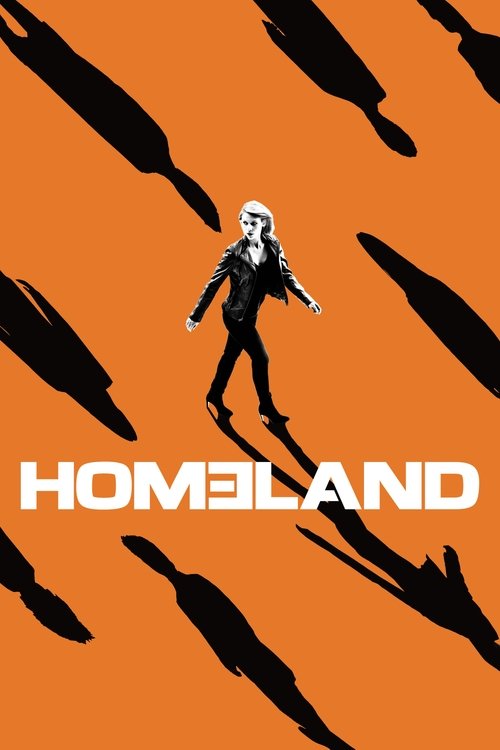
Homeland
Season 7 Analysis
Season Overview
After the attempted assassination of the president, Carrie Mathison is out of the White House while 200 members of the intelligence community are imprisoned. Now Carrie must prove that not all conspiracies are theories.
Season Review
Categorical Breakdown
The season sets up a conflict where the primary domestic villains are a loudmouth right-wing media personality, Brett O'Keefe, and his armed, rural American followers who are easily manipulated. This frames a particular segment of the white American male population as the central threat to the republic, easily exploited by foreign adversaries. A minor plot point also introduces an element of law enforcement's racial profiling of an innocent person to create distrust.
The central theme is the near-catastrophic collapse of the American political and civil system, depicting the United States as 'tearing itself apart' and in 'free fall.' The country's internal mechanisms, including the presidency and the intelligence community, are shown as fundamentally flawed, paranoid, and corrupt, manipulated by domestic opportunists and foreign powers. The narrative focuses almost exclusively on the fragility and corruption of the 'Home' nation.
Carrie Mathison is consistently portrayed as the hyper-competent, indispensable hero who is always right, contrasting with male 'fucktard bureaucratic males' who constantly get in her way. The arc of the season explicitly resolves her internal conflict by having her conclude she must abandon her daughter, Frannie, to focus solely on her career. This elevates the espionage career as the ultimate source of fulfillment, reinforcing an anti-natalist message that motherhood is a hindrance to a woman's true purpose and power.
The season's central plot is focused on domestic political turmoil and Russian interference in American democracy. There are no prominent storylines, characters, or ideological lectures centering alternative sexualities or gender theory presented in the main narrative.
Religious themes are largely absent from the core narrative of political espionage and domestic crisis. The show's moral conflict is secular, residing in the corruptible nature of government power and individuals, rather than any hostility or attack directed toward religious institutions or faith as a source of moral law.