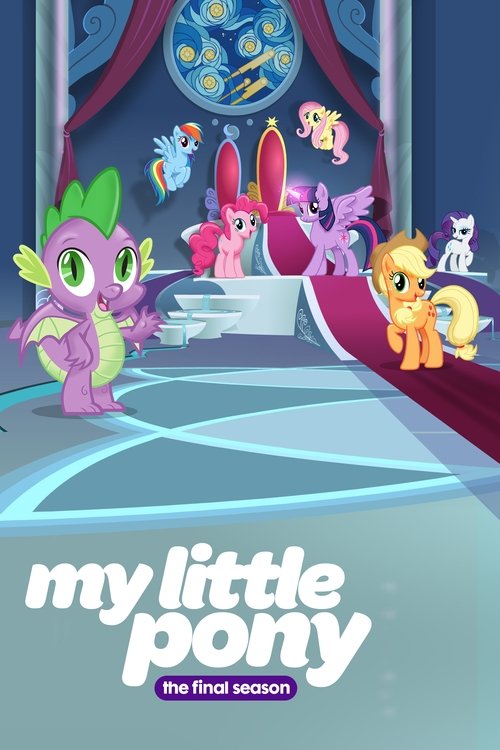
My Little Pony: Friendship Is Magic
Season 9 Analysis
Season Overview
No specific overview for this season.
Season Review
Categorical Breakdown
The season focuses on the 'Young Six,' a diverse group of different species that serves as a stand-in for racial intersectionality. Plots frequently center on overcoming group-based prejudices and achieving multicultural social equity.
The narrative treats the home culture of Equestria as a positive force worth defending. It respects the legacy of past rulers while seeking to improve the nation through new leadership rather than dismantling its foundations.
Leadership and power are exclusively female. The show depicts a world where women solve all major problems, while male characters are consistently portrayed as sidekicks, bumbling comic relief, or physically subordinate.
The season introduces the first explicitly gay couple in the series and features a same-sex marriage in the finale. These elements were introduced as a deliberate effort to bring modern sexual identity politics into the show's setting.
Traditional religion is non-existent, replaced by the 'Magic of Friendship' as a secular moral substitute. While it does not attack religion directly, it frames morality as a product of social consensus and collective willpower.