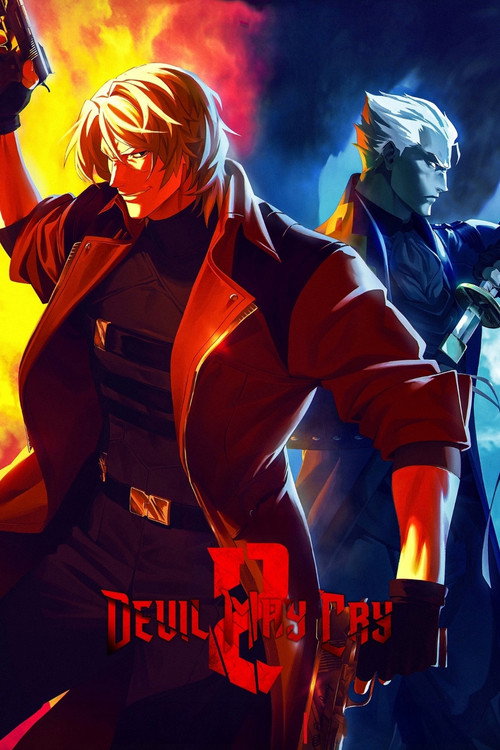
Devil May Cry
Season 2 Analysis
Season Overview
A war between worlds ignites as Dante must battle the only force that mirrors his own: his estranged twin brother Vergil. In Season 2, Dante must confront his own devils and the feeling of family he lost as a child. With the reemergence of Vergil, will Dante lay to rest old demons or fall victim to them?
Season Review
Categorical Breakdown
The narrative utilizes the demon invasion as a heavy-handed allegory for marginalized groups and systemic oppression. Human villains are primarily white male corporate billionaires and military leaders who manipulate narrative through propaganda, effectively framing the 'human system' as a source of evil.
The season depicts the U.S. military and modern corporate structures as warmongering machines that are more morally bankrupt than the demons they fight. It characterizes the defense of the human home-front as a 'Gestapo-like' operation, showing deep hostility toward the civilizational order.
Lady serves as a high-ranking commander who successfully emasculated Dante by drugging and freezing him at the end of the previous season. While she maintains a romantic interest in Dante, her position of authority over the male-dominated military hierarchy leans into the 'Girl Boss' archetype.
Sexual ideology is largely absent from the core plot. The series maintains a traditional focus on the Sparda family and a heterosexual romantic dynamic between Dante and Lady, avoiding the centering of queer theory or alternative sexualities.
While the show focuses on demonic and occult hierarchies, it lacks a direct attack on Christianity. However, it replaces transcendent morality with a focus on corporate sorcery and subjective power dynamics, leaving a spiritual vacuum where faith should be a shield.