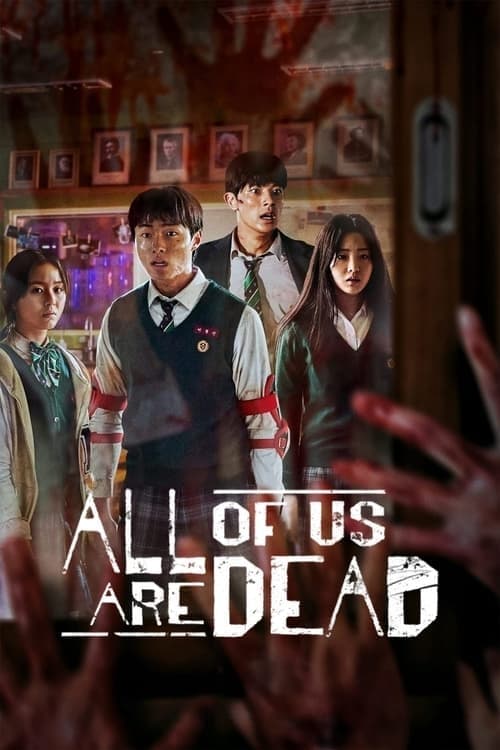
All of Us Are Dead
Season 1 Analysis
Season Overview
No specific overview for this season.
Season Review
Categorical Breakdown
The narrative is built around systemic critique, focusing heavily on class and social hierarchy as key elements of corruption. A rich, privileged student explicitly vilifies a poor student, using socio-economic status as a basis for character judgment and prejudice. The entire crisis is rooted in the failure of the school system to address bullying, which is a form of power-based oppression. The plot exists to heavily lecture on systemic issues, though the 'intersectionality' is based on domestic class and status rather than the Western race paradigm.
The show is extremely hostile toward the national institutions and systems. The school administration fails to protect students, the government and military prioritize their own interests and reputation, and ultimately decide to bomb the city, killing thousands of citizens to contain the problem. This action demonstrates a complete lack of faith in the nation's protective institutions, framing them as fundamentally corrupt, callous, and a greater threat to the citizens than the zombies themselves. This constitutes a high level of civilizational self-hatred for the governing apparatus of the home culture.
Gender dynamics are relatively balanced, preventing a high score. The female lead, On-jo, is the emotional anchor and strategist, offering key survival tips, while another female character, Nam-ra, transforms into a powerful 'hambie' fighter. However, the male lead, Cheong-san, is equally courageous, resourceful, and makes the ultimate, selfless sacrifice. On-jo's firefighter father is the primary heroic adult who repeatedly risks his life. Men and women are depicted as distinct but complementary in their roles and heroism. No overt anti-natalist messaging or Mary Sue perfection is present.
The series focuses entirely on survival and the social critique of Korean high school life. Romantic subplots are centered on normative male-female pairings. There is no inclusion or explicit centering of alternative sexualities, deconstruction of the nuclear family, or overt lecturing on gender ideology.
Religious imagery is used cynically at the beginning of the series. The opening scene features a neon cross reflected upside-down, a visual cue for evil. The teacher who creates the virus uses a Bible to beat his infected son into submission, turning a religious text into a weapon. While the show is not a full-scale anti-religious lecture, its use of Christian symbols is explicitly negative and links faith materials to violence and a moral vacuum, suggesting traditional religion is not a source of strength in this world.