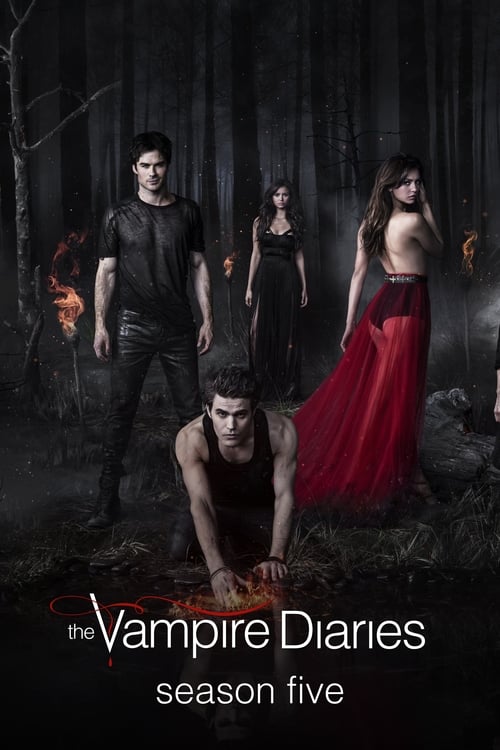
The Vampire Diaries
Season 5 Analysis
Season Overview
The hit series enters its fifth season with some characters headed off to college, Katherine trying to survive as a human and a shocking Salvatore secret.
Season Review
Categorical Breakdown
The plot diminishes the power and agency of the show's main Black female character, the witch Bonnie, by making her die and then resurrecting her as a powerless 'Anchor' who must repeatedly sacrifice herself for the white protagonists. The focus remains almost entirely on the white leads, sidelining the character of color to a role of servitude and martyrdom for the greater group.
The central conflict involves a mystical group called The Travelers seeking to strip the town of Mystic Falls of its supernatural magic, which attacks the core identity of the setting. This is a critique of the town’s magical heritage, but it is not framed as an attack on Western civilization or a vilification of ancestors in a broader political sense. Ancestors are often antagonists, a common trope in the genre.
Female protagonists are central to the story, but their agency is consistently revoked: the lead heroine is possessed and controlled for half the season, and a powerful 2000-year-old witch is reduced to the motive of a ‘jealous ex-girlfriend’ seeking revenge. The main female lead's moral code is shown bending to accommodate and redeem the toxic male lead’s worst actions, depicting co-dependence rather than strength or independence.
The core of the show remains strictly heteronormative, centering on a primary heterosexual love triangle. A recurring character is canonically gay, but this is a minor plot point and is not explored through a relationship or used to advance a political ideology. The focus of romance and family structure is traditional male-female pairing.
The entire moral framework of the show is subjective, determined only by personal loyalty and love. Heinous acts, including murder, torture, and mass destruction, are forgiven or redeemed solely through emotional connection, negating any concept of a transcendent moral law. Traditional religion is nonexistent in the world’s powerful spiritual structure, which operates entirely through a magical, amoral afterlife known as 'The Other Side'.