The Vampire Diaries
Season 3 Analysis
Season Overview
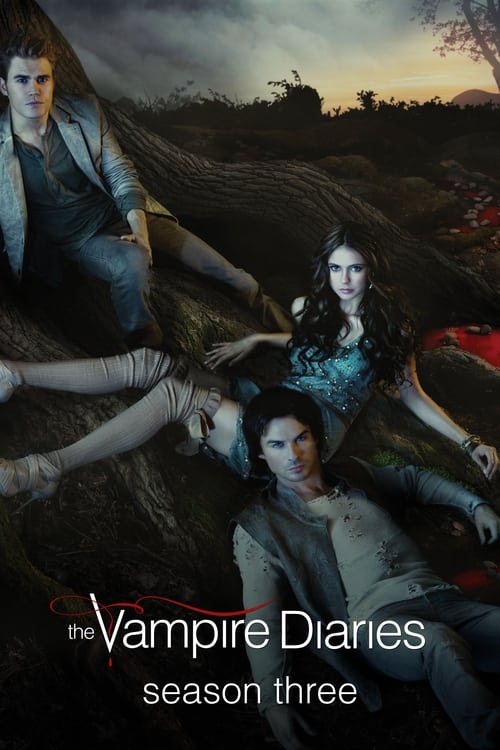
Season three opens the door to learn more about Klaus and the Original Family as his motives for wanting Stefan on his side are finally revealed. As Stefan sinks deeper into the dark side, Damon and Elena struggle with the guilt of their growing bond, even as they work together to bring Stefan back from the edge.
Season Review
Categorical Breakdown
The narrative does not rely on race or immutable characteristics for conflict; character merit is secondary to supernatural status and personal loyalty. The main cast is overwhelmingly white. Two major characters of color, Bonnie and Tyler, are relegated to supporting roles or sidelined, but the narrative does not contain lectures on systemic oppression or privilege.
The history of the fictional American town of Mystic Falls is framed as being fundamentally corrupt and bigoted, founded by ancestors who actively hunted and persecuted non-human beings. This consistently deconstructs the civic pride and heritage of the town. The show focuses on the trauma and dysfunction of the central European Original family, portraying ancestral conflict as a cycle of abuse, which undermines the institution of family.
Female characters like Elena are powerful figures in the central conflict, but her major arc is choosing between the two male leads, placing her directly in a traditional romance dynamic. Other female characters are highly competent, like the witch Bonnie and the vampire Caroline. Male leads, such as Damon, Stefan, and Klaus, are depicted as supremely powerful and manipulative, not as bumbling idiots or weak figures. Motherhood is not a central theme, and the anti-natalist message is absent.
The primary emotional conflict and all featured romantic relationships are strictly heterosexual, centered on the main love triangle. The show operates entirely within a normative structure, with no inclusion of alternative sexualities, queer theory, or gender ideology.
Objective morality is replaced by a subjective and relativistic 'power dynamics' framework, where characters commit violent and evil acts and are routinely justified or forgiven based on their loyalty to the core group. Traditional religion is absent as a source of strength, and the supernatural world of witches and vampires functions as the ultimate spiritual authority. The entire moral compass is muddled and dark, which creates a spiritual vacuum.