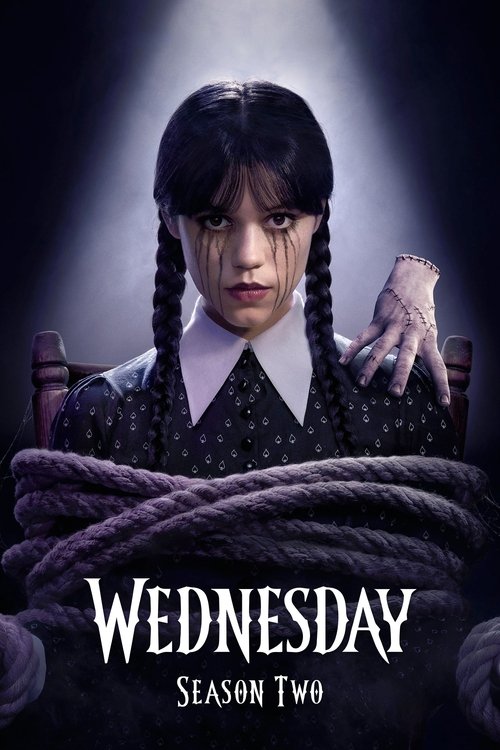
Wednesday
Season 2 Analysis
Season Overview
No specific overview for this season.
Season Review
Categorical Breakdown
The narrative's foundational conflict centers on the systemic oppression of 'Outcasts' (supernatural beings) by 'Normies' (non-magical townspeople). The Outcast identity, defined by an immutable characteristic (species/powers), dictates who is persecuted and who is the persecutor, functioning as a clear allegory for an intersectional hierarchy. New Principal Barry Dort attempts to co-opt Wednesday as a symbol for 'outcast pride' on campus. The previous season’s primary theme of the town covering up its 'anti-outcast past' is the mechanism for explaining modern villainy and prejudice.
The series frames the local, historical 'Normie' culture and institutions of Jericho as fundamentally corrupt, bigoted, and responsible for historical atrocities against the outcast community. This aligns with hostility toward the foundational elements of one's civilization. The Outcasts, who exist outside the 'Normie' social structure, are consistently depicted as morally and spiritually superior to the dominant surrounding culture. Respect for the sacrifices of ancestors is reserved exclusively for the non-Normie lineage, such as Goody Addams.
Wednesday remains the archetypal 'Girl Boss' — instantly a campus celebrity, hyper-competent, and emotionally invulnerable. Enid's arc focuses on her gaining confidence by finding her 'wolf pack' and asserting independence from Wednesday. The male characters are largely portrayed as either antagonists (Tyler/Hyde), corrupt administrators (new Principal Dort), or needing Wednesday's protection (Pugsley). The new key family dynamic centers on the three generations of powerful Addams women (Wednesday, Morticia, Grandmama Hester Frump), where Grandmama is an emotionally distant, immensely successful matriarch whom Wednesday holds in high regard over her mother's more traditional marriage and family focus.
The plot continues to use the 'Outcast' versus 'Normie' dynamic as a general allegory for centering alternative, non-normative identities. While there are no explicit references to gender ideology or a focus on transitioning in the available plot details, the narrative's central theme consistently validates identities that reject the normative structure. A new character, Isadora Capri, aligns herself with a villain to create an 'alternate vision of community' in a 'Hyde sanctuary,' an anti-institution formation that rejects established norms.
The conflict remains situated in a world where the primary historical villain (Joseph Crackstone, a clear puritanical/Christian figure) was established as the root of past evil and bigotry against outcasts. The new threats are mostly secular, but the overarching moral framework is one of subjective 'power dynamics' between two groups, maintaining the view that objective truth or higher moral law is absent. The morality of characters is defined by which 'side' (Outcast or Normie) they ultimately serve.