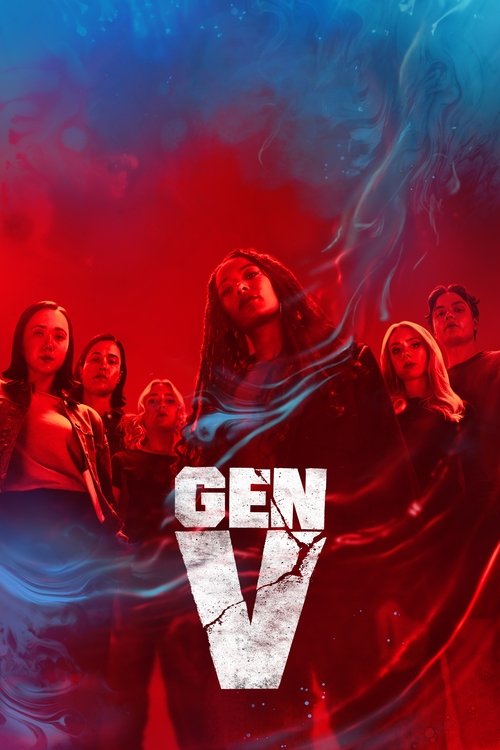
Gen V
Season 2 Analysis
Season Overview
As America adjusts to Homelander's reign, at Godolkin University, the new Dean preaches a course to make students more powerful than ever. Cate and Sam are heroes, while Marie, Jordan, and Emma return to class, after months of trauma. War is brewing between Humans and Supes and our crew learns of a secret program from the 60s that may be significant to today. And, somehow, Marie is a part of it.
Season Review
Categorical Breakdown
The plot focuses heavily on the struggle of marginalized groups against a systemic hierarchy. Characters are defined by their status within an intersectional framework, and the 'Supe' vs 'Human' conflict is used as a thinly veiled metaphor for racial and social power dynamics.
The series portrays the foundations of the university and the nation as rooted in secret, unethical experiments from the 1960s. Historical institutions are depicted as corrupt and oppressive, suggesting that the culture's heritage is fundamentally tainted.
Female leads like Marie and Emma drive the narrative and possess superior moral agency. Many male characters are depicted as radicalized, incompetent, or subservient to the agendas of more powerful women.
Gender-fluidity is a central plot point through the character of Jordan Li, whose shifting identity is framed as a source of power and personal truth. The show prioritizes queer theory and deconstructs traditional biological norms as a primary theme.
The narrative operates in a moral vacuum where traditional religious values are absent or associated with the villainous, nationalistic elements of society. Morality is framed entirely through the lens of social justice and power balance.