Peacemaker
Season 2 Analysis
Season Overview
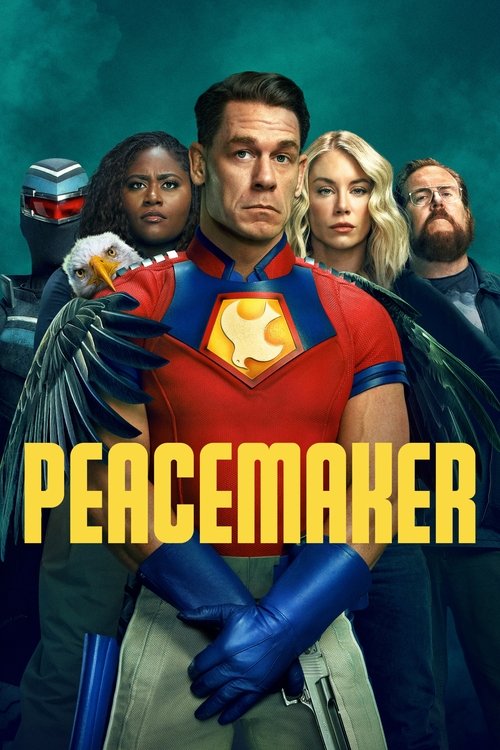
Following the exposure of Project Butterfly and the disbandment of Task Force X, the 11th Street Kids grapple with new identities, new friendships, and new rivalries. For Peacemaker, this means reconciling his past with his newfound sense of purpose — here and in an alternate dimension. Meanwhile, Rick Flag Sr. reappears as the director of A.R.G.U.S., focused on controlling metahumans and avenging the death of his son at the hands of Peacemaker.
Season Review
Categorical Breakdown
The narrative actively critiques the male protagonist's identity and its connection to white supremacy and fascism through the reappearance of his father's legacy and a pivotal storyline involving Earth-X, a Nazi-controlled dimension. The new character Red St. Wild has a subplot that centers on the concept of cultural appropriation. Casting retains a diverse ensemble, and a major female character of color, Adebayo, functions as the empathetic moral compass of the entire team.
The season sets up a conflict against an alternate universe where the Nazis achieved victory, providing a clear external evil that is antithetical to Western values. However, the internal conflict strongly criticizes the protagonist's family and his cultural legacy, specifically exploring how his patriotism and masculinity are linked to his father's white supremacist ideology, framing his home culture's worst elements as a fundamental problem he must overcome.
The core thematic arc involves the critique of 'toxic masculinity,' exemplified by the main character's former persona and his father's influence. Female characters like Adebayo and Harcourt are consistently presented as the most rational, emotionally healthy, and strategically competent members of the team. Harcourt's emotional revelation is the direct motivation for the protagonist to embrace a new path instead of retreating.
The season includes the continuation of the established lesbian relationship between Adebayo and her wife. The presence of this relationship is treated as a normal part of the character's life and is not the central plot, but it ensures that the nuclear family structure is not presented as the singular norm. There is no significant new emphasis on gender ideology or overt lecturing on sexual identity.
The narrative's focus on the protagonist's redemption is entirely framed in secular, psychological terms, exploring 'guilt, redemption, identity, trauma, grief and healing.' Objective Truth and a higher moral law are absent from the conflict's resolution. Faith and traditional religion are not present in any meaningful role, whether positive or negative, leaving a spiritual vacuum where morality is defined by individual and interpersonal progress.