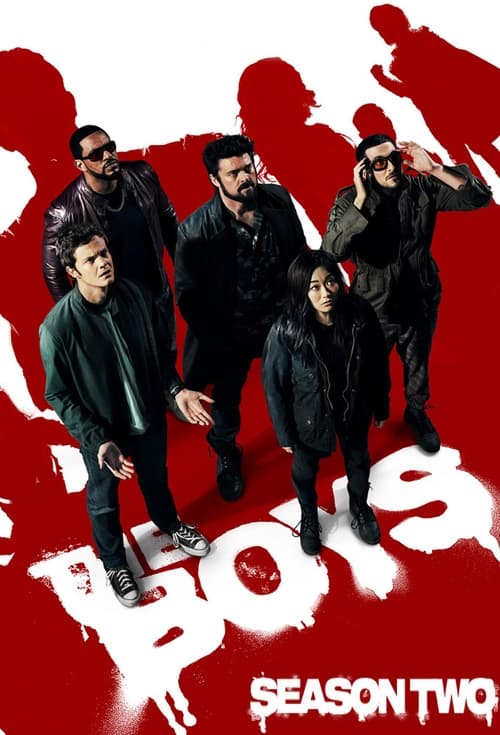
The Boys
Season 2 Analysis
Season Overview
The even more intense, more insane season two finds The Boys on the run from the law, hunted by the Supes, and desperately trying to regroup and fight back against Vought. In hiding, Hughie, Mother’s Milk, Frenchie and Kimiko try to adjust to a new normal, with Butcher nowhere to be found. Meanwhile, Starlight must navigate her place in The Seven as Homelander sets his sights on taking complete control. His power is threatened with the addition of Stormfront, a social media-savvy new Supe, who has an agenda of her own. On top of that, the Supervillain threat takes center stage and makes waves as Vought seeks to capitalize on the nation’s paranoia.
Season Review
Categorical Breakdown
The main antagonist is revealed to be a literal centuries-old Nazi and white supremacist whose ideology drives a major plot thread. This villain targets and murders individuals explicitly based on their race, directly linking the narrative to systemic racism and historical oppression. White males like Homelander are portrayed as narcissistic sociopaths, and the most heroic characters are women and people of color who unite to defeat the white supremacist villain.
The Vought corporation, a representation of American corporate and military power, is revealed to have been founded by a Nazi scientist, firmly establishing the core American superhero institution as fundamentally rooted in fascism and white supremacy. All key American institutions—including government, celebrity, and religion—are depicted as corruptible tools for war-mongering capitalism, creating a nihilistic critique of the home culture's foundation.
The female Supes, Starlight, Queen Maeve, and Kimiko, are consistently portrayed as the most competent, morally grounded, and physically capable heroes who execute the season's main victory. Male characters like Homelander are toxic and abusive, The Deep is a self-pitying idiot, and even the main male protagonist, Hughie, is largely ineffectual without female guidance. Motherhood is not celebrated, as the most significant mother figure is killed, turning her son into a tool for the plot.
Queen Maeve's sexuality is an integral part of her character arc, with her ex-girlfriend being used by Homelander as a point of leverage and control. The narrative dedicates time to a subplot exposing a high-profile Christian Supe as a closeted hypocrite who runs 'pray the gay away' programs while engaging in secret queer sex, directly critiquing traditional views on sexuality.
Vought’s marketing leverages evangelical Christianity to create a false origin myth that Supes are 'chosen by God,' directly framing organized religion as a tool for corporate manipulation and power. A main character who was previously Christian openly rejects her faith after confronting the system's corruption. All on-screen Christian figures, such as the Supe Ezekiel and the Believe Expo, are depicted as either bigoted, hypocritical, or complicit in the false narrative.