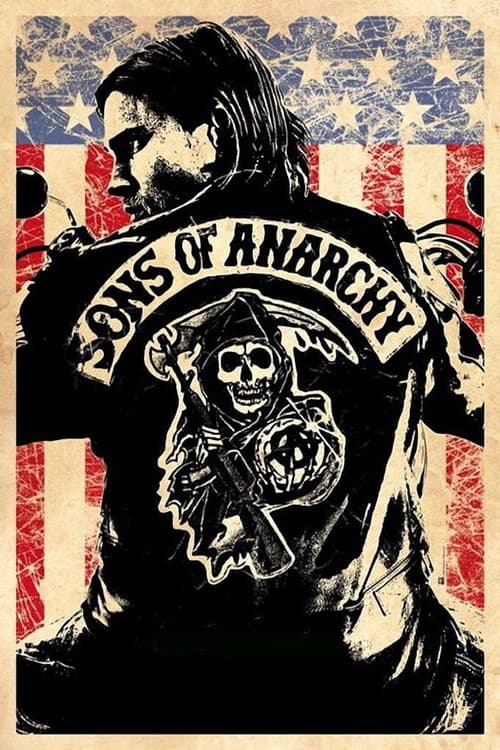
Sons of Anarchy
Season 1 Analysis
Season Overview
The Sons of Anarchy live, ride, and die for brotherhood. But as the club's leader Clay Morrow and his wife Gemma steer them in an increasingly lawless direction, Gemma's son Jax is torn between loyalty and the legacy.
Season Review
Categorical Breakdown
Characters are judged primarily on their loyalty and utility to the club, following a meritocracy of outlaw competence. The main club is racially segregated, with an implicit white-only rule, and interactions with other ethnically homogenous gangs (Mayans, One-Niners) are depicted as a matter of criminal business necessity, not intersectional vilification. The narrative simply presents a fact of the outlaw subculture without lecturing the audience on systemic oppression or white guilt.
The narrative centers on defending the home territory of Charming and the institution of the club itself, showing deep loyalty to the 'brotherhood' as the only reliable shield against chaos (rival gangs, law enforcement). The conflict of the season is Jax's desire to honor his father's founding principles and save the club's original idealistic heritage from the corruption of the present. The founding ancestors are a moral standard, not a source of shame.
Female characters like Gemma Teller-Morrow and Dr. Tara Knowles are intelligent, powerful, and central to the plot, but not presented as 'Girl Boss' archetypes; their power is derived from their status as mothers and 'old ladies' in the patriarchal structure. The matriarchal role is celebrated as a source of strength, and the primary drive of the women is the protection of family and children. The professional, highly-educated character (Tara) willingly subordinates her career ambition to join the club's life and fulfill a complementary, protective role alongside the protagonist.
The core of the show’s relationship structure is the traditional male-female pairing. The narrative is focused entirely on heterosexual, hyper-masculine outlaw culture. There is no presence of 'queer theory' or gender ideology, and the nuclear family unit—albeit one entangled in crime—is a central structure the main characters are fighting to secure.
The show operates in a world of profound moral relativism, where the club’s violent, self-created code dictates right and wrong, embodying the idea that morality is subjective to 'power dynamics.' There is no specific hostility toward established religion or Christian characters driving the plot, but no transcendent, objective moral law is acknowledged outside of the outlaw code and the individual's conscience. This is a spiritual vacuum, but not an explicit 'Anti-Theist' polemic.