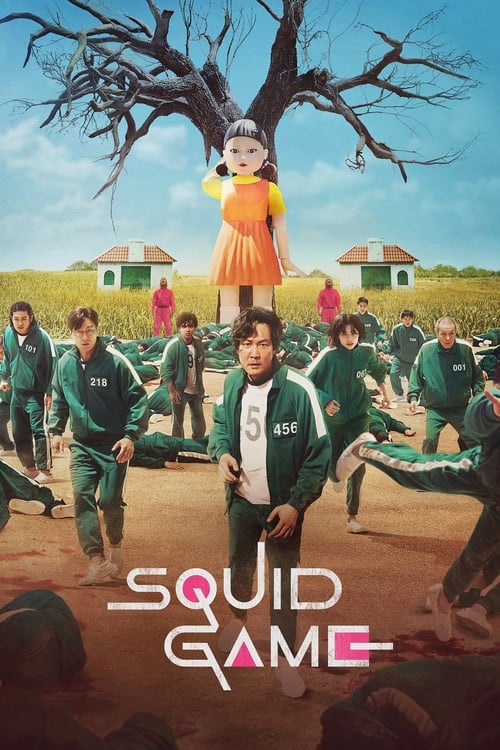
Squid Game
Season 1 Analysis
Season Overview
Hundreds of cash-strapped players accept a strange invitation to compete in children's games. Inside, a tempting prize awaits — with deadly high stakes.
Season Review
Categorical Breakdown
The narrative uses race and national origin to illustrate economic marginalization, not to lecture on privilege. The main characters include a North Korean defector and a Pakistani migrant worker, but their struggle is defined by their debt and class status, making them economic victims alongside the South Korean main character. The wealthy VIPs who organize the games are international and include a white American who is depicted as a depraved sadist, which partially fulfills the 'vilification of whiteness' trope. However, the primary architects and front-runners of the game are Korean, keeping the focus on class and local systemic corruption, not on anti-Western vilification.
The show is a strong, intentional allegory and critique of South Korean society's extreme, cutthroat competition and financial inequality. The creator describes the series as a fable about modern capitalist society. The premise itself frames the real world outside the game as so corrupt and hopeless that debt-ridden citizens willingly return to a place where they will likely be murdered. The established modern institutions of the home culture are depicted as fundamentally predatory and spiritually corrupt, driving the poor to madness and serving the grotesque entertainment of the rich.
Female characters face gender-based prejudice within the game, particularly when men refuse to team up with them due to the perceived physical disadvantage in games like Tug-of-War. The female lead, Kang Sae-byeok, is a stoic, resourceful survivor who is defined by her protective relationship with her younger brother, not by a man. Another prominent female character is depicted as manipulative, sexualized, and hysterically erratic. This mixture of a strong female lead with other unflattering or traditionally victimized female portrayals, and the general belief that women are physically weaker in the game, does not align with a 'Girl Boss' or emasculating agenda.
The series includes a single explicitly gay character: one of the foreign VIPs. This character is portrayed as a rich, debauched villain who attempts to coerce a masked guard into sexual acts, leaning into an extremely negative and stereotypical depiction of a sexual predator. This portrayal is the antithesis of the modern progressive push to center or normalize alternative sexualities; in fact, critics pointed out its homophobic undertones. The show does not feature any discourse on gender ideology or deconstruction of the nuclear family. The primary female protagonist's motivation is to reunite her family.
One of the central players is a Christian pastor (Player 244) who is depicted as greedy, untrustworthy, and cowardly. Another female character reveals that her father, a pastor, sexually abused her. The show uses these characters to critique a specific strain of hypocritical, institutionally corrupt Christianity found in South Korea. The overall theme presents money and extreme competition as a 'false god' and a 'pathetic savior' that causes people to lose their souls, suggesting that transcendent morality and selfless human compassion (like Gi-hun's) exist outside the corrupt system and religious institutions.