Heroes
Season 2 Analysis
Season Overview
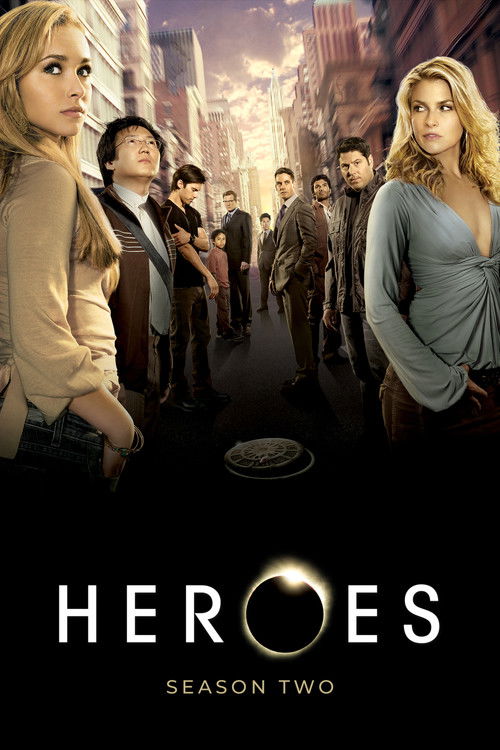
Season 2 introduces new stories — and new heroes — following the apocalyptic showdown in New York City. Claire has moved with her family to Southern California in order to hide her indestructible abilities and there she encounters a young man with a secret of his own. Matt gains new authority in tracking down a murderous force stalking the Heroes, while Suresh uncovers a virus that could eradicate them all. As each sensational chapter unfolds, there is no resisting the extraordinary.
Season Review
Categorical Breakdown
The cast is multi-ethnic, featuring prominent storylines for Japanese and Latino characters, but the narrative emphasizes their unique abilities and personal choices rather than their place in an intersectional hierarchy. There is no vilification of whiteness or lectures on systemic oppression.
The plot involves a shadowy organization called The Company, but this is presented as a classic corporate/government conspiracy trope rather than a critique of Western civilization. Hiro’s arc in feudal Japan demonstrates a deep respect for historical tradition and the archetype of the hero.
Female leads like Claire Bennet and Maya Herrera are powerful but struggle with their burdens and rely heavily on family support. The show avoids the 'Mary Sue' trope by giving female characters significant flaws and learning curves, while male characters like Peter and Nathan Petrelli remain central, competent heroes.
The season contains no references to sexual ideology or gender theory. All romantic subplots are heterosexual and traditional in nature, such as the relationship between Claire and West or Hiro and Yaeko. The nuclear family remains the primary social unit in the series.
While the show is largely secular and focused on science fiction, it does not display hostility toward religion. It treats concepts like destiny and the 'soul' with a sense of wonder and mysticism rather than cynicism or anti-religious sentiment.