Supernatural
Season 4 Analysis
Season Overview
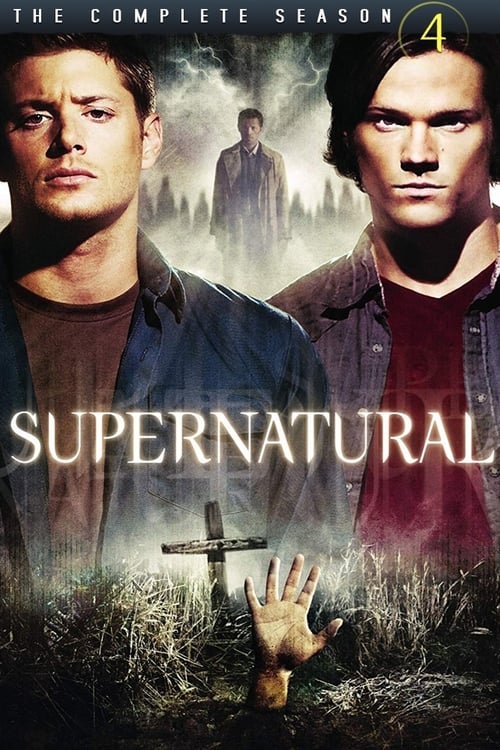
Resurrection. After enduring unspeakable torture, Dean escapes from Hell, rescued by an all-powerful creature he's never seen before an Angel a warrior of God who recruits Sam and Dean in Heaven's battle against Hell. And there are whispers that a certain fallen angel will soon be freed from his prison deep in Hell: Lucifer. If Sam and Dean can't stop it if Lucifer walks free he'll bring on the Apocalypse. Meanwhile, the Winchester brothers reunite and hit the road, battling the supernatural wherever they go. They encounter demons, spirits, Dracula himself and even a drunk, heavily armed seven-foot-tall teddy bear. All the while, the ultimate war draws them into its horror. Caught between Heaven and Hell, between God and the Devil, the Winchester brothers must battle for the future of humankind.
Season Review
Categorical Breakdown
The core conflict revolves entirely around the personal choices, bloodline destiny, and character merits of the two white male leads, Sam and Dean. The narrative does not utilize an intersectional lens or focus on identity traits. Secondary and guest characters are cast without apparent political motivation or commentary on race.
The season contains a strong thematic critique of the authority of celestial institutions (Heaven) and the patriarchal foundation of the Winchester family's hunting legacy. The critique is leveled at corrupt institutions and toxic family dynamics, with the protagonist's goal being to save humanity by rejecting the destructive plans of both Heaven and Hell. This is a deconstruction of institutional heritage, though not explicitly a vilification of broader Western culture.
Female characters are present as formidable forces, but they are consistently villains or antagonists, such as the demons Lilith and Ruby. The portrayal of these characters leans toward the traditional trope of the femme fatale or evil seductress (Ruby) who manipulates the male lead. The narrative avoids 'Girl Boss' tropes; female characters with power are positioned as dangerous and deceptive. The show's focus on brotherhood also pushes women to the periphery of the main plot.
Alternative sexualities are not a focus of the main storyline. The central, driving relationships are the male-male bond between the brothers and their male mentor, Bobby Singer. Sexual identity is not centered, and the show maintains a normative structure where sexuality is a private, secondary characteristic not subject to political commentary.
The season explicitly introduces the Abrahamic mythology only to immediately subvert it. The angels (Heaven) are revealed to be totalitarian, arrogant, and willing to trigger the Apocalypse to achieve a state of controlled 'Paradise,' making them morally equivalent to the demons. This narrative frames traditional religious authority as fundamentally corrupt, manipulative, and dictatorial, elevating the human value of free will and personal choice over unquestioning divine destiny.