Bones
Season 4 Analysis
Season Overview
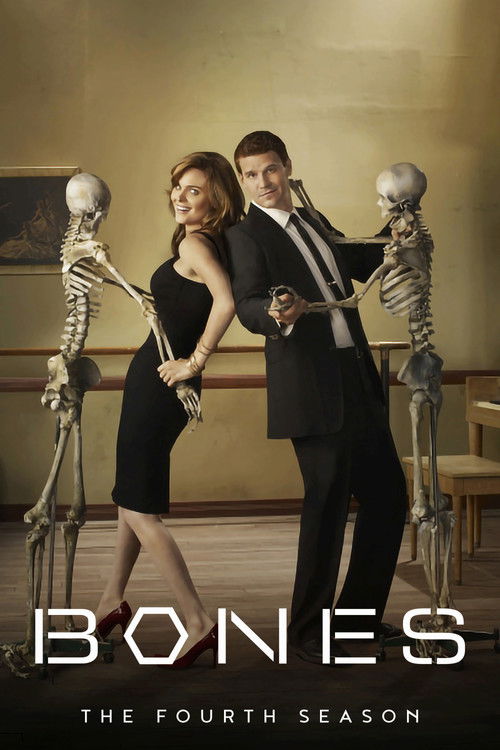
From Washington to London, Booth and Brennan tackle cases across continents. With strange crimes and growing chemistry, their partnership is pushed into new territory.
Season Review
Categorical Breakdown
The narrative frequently judges characters by their merit and intelligence, placing scientific competence above all else, which keeps the score away from the extremes. However, the season introduces Arastoo Vaziri, an intern of color whose initial characterization includes a fake accent and an intolerance from Booth regarding his prayer, injecting race- and religion-based prejudice into the professional sphere. Furthermore, the lead character, Dr. Brennan, is known for making remarks about IQ, race, and 'urban' youths under the guise of scientific 'rationality,' which is framed as her social flaw but introduces commentary on immutable characteristics and systemic issues.
The season premiere takes place in London, but the travel does not result in a demonization of American or Western civilization; the US and UK investigators collaborate on a global crime. Dr. Brennan's core philosophy involves the deconstruction of major Western institutions like marriage, which she calls 'ridiculous,' 'barbaric,' and counter to human nature, aligning with the hostility toward one's 'home' heritage. This recurring theme elevates the score slightly from the lowest end.
The main cast is dominated by powerful, exceptionally competent female leads. Dr. Brennan is a classic 'Girl Boss,' portrayed as intellectually flawless and superior to nearly all men in the lab, while Agent Booth is often the 'bumbling idiot' she must explain things to. She expresses strong anti-natalist and anti-family views by explicitly calling motherhood a biological trap and marriage a ridiculous, non-monogamous delusion. Angela Montenegro is depicted making highly inappropriate and sexually harassing comments and actions towards the male interns, reversing typical workplace power dynamics for comedic effect.
The season directly inserts and centers alternative sexuality and gender identity into the narrative with specific, high-profile episodes. 'The He in the She' features a transgender pastor as the victim, and although the ultimate message attempts tolerance, the characters engage in persistent, crass misgendering and outdated terminology, framing sexual identity as a central point of discussion. 'The Girl in the Mask' features an androgynous Japanese scientist whose gender is debated and physically investigated by the team, moving beyond simple representation to an intrusive and objectifying focus on biological reality.
Dr. Brennan is a staunch atheist who constantly mocks Booth's Catholicism and refers to faith as irrational delusion. Booth's faith is consistently shown to be the source of his emotional intelligence and moral core, positioning it as a necessary complement to Brennan's cold logic. This foundational tension where both belief systems are allowed to exist, and where faith is ultimately aligned with the heroic lead's moral character, prevents the score from reaching a high extreme, though traditional religion is consistently subject to ridicule.