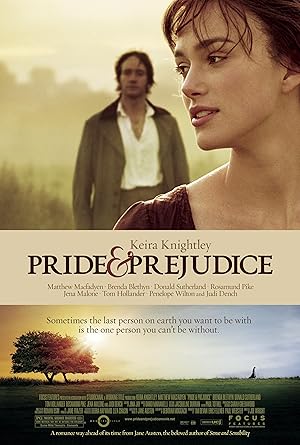
Pride & Prejudice
Plot
The story is based on Jane Austen's novel about five sisters - Jane (Rosamund Pike), Elizabeth (Keira Knightley), Mary (Talulah Riley), Kitty (Carey Mulligan), and Lydia Bennet (Jena Malone) - in Georgian England. Their lives are turned upside down when wealthy young Mr. Bingley (Simon Woods) and his best friend, Mr. Darcy (Matthew Macfadyen), arrive in their neighborhood.
Overall Series Review
Categorical Breakdown
The casting is historically authentic for Georgian England with all principal characters being white. The narrative's core conflict is not based on race or intersectional hierarchy but on socio-economic class, manners, and the individual merit of character. Judgment is overcome when Mr. Darcy's pride and Elizabeth's prejudice are corrected by self-reflection, focusing entirely on personal character rather than immutable characteristics.
The film visually celebrates the beauty and heritage of the English countryside, grand estates, and traditional domestic life. The story critiques the specific, oppressive *social rules* of the period, particularly the focus on wealth in marriage, but it does not frame Western civilization, home, or ancestors as fundamentally corrupt. Institutions like the family unit are central and ultimately reinforced through the plot's resolution.
Elizabeth Bennet is an independent, strong-willed, and intelligent woman who rejects marriage proposals for financial gain, standing up against the patriarchal economic necessity of the time. However, she is not a flawless 'Girl Boss' but is deeply flawed by her own misjudgments, and her ultimate fulfillment is found in a complementary, loving marriage with an equally developed male lead. The film celebrates the formation of a family based on mutual respect and affection, not a rejection of motherhood or domesticity.
The entire plot focuses on the conventional marriage market and the formation of traditional male-female nuclear family units. No alternative sexualities, gender ideology, or deconstruction of the nuclear family are present in the narrative or its themes. The structure adheres completely to the normative social and sexual mores of its historical setting.
The story's resolution is a moral one, hinging on the characters achieving self-knowledge, repentance, and humility to overcome pride and prejudice, which aligns with transcendent moral principles. The satirical character of Mr. Collins critiques clerical hypocrisy and obsequiousness, not the Christian faith itself. Objective moral truth is acknowledged implicitly through the virtues required for a happy and successful life.