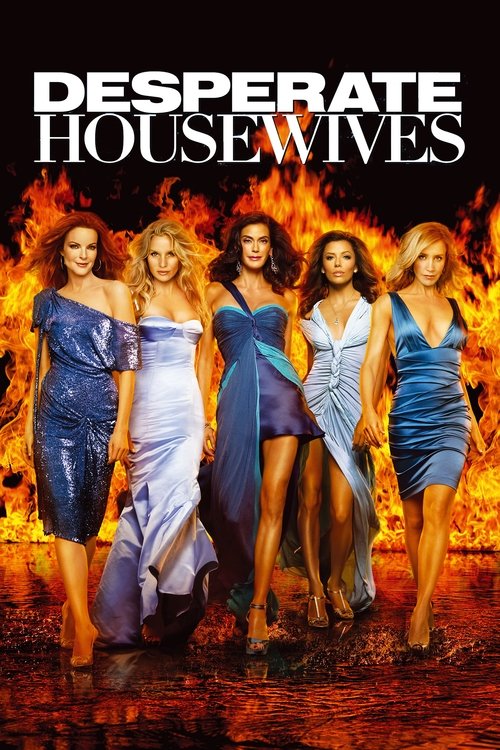
Desperate Housewives
Season 4 Analysis
Season Overview
Katherine Mayfair and her family are introduced as the center of the season's mystery.
Season Review
Categorical Breakdown
The narrative focuses entirely on individual secrets, personal neuroses, and morality, not systemic oppression or intersectional hierarchy. The conflicts are character-driven, such as a mysterious past and family cover-ups. The presence of Gabrielle and Carlos Solis is colorblind; their ethnicity is a secondary cultural detail, not a source of political conflict or privilege lecturing.
The show satirizes the moral dysfunction and hypocrisy of the American suburban facade, a long-standing tradition in domestic melodrama. It does not frame Western civilization, the nation, or its foundational institutions as fundamentally corrupt. The community is ultimately depicted as a source of strength, as neighbors rally together after the tornado and for Lynette's cancer battle.
The women are the central, powerful protagonists who drive all major plot points and mysteries. Men are often portrayed as bumbling (Tom), controlling (Orson), or outright toxic and violent (Victor, Wayne). This pushes the score up. However, the complex, high-stakes portrayal of motherhood—Susan's pregnancy, Lynette's fierce protection of her family while battling cancer, and Bree's extreme deception to protect her daughter's baby—demonstrates that family is a source of vital meaning, preventing a high 'anti-natalism' score.
The season introduces a new gay couple, Bob and Lee, to Wisteria Lane as neighbors, making their relationship part of the normative social fabric and a source of comedic conflict with the main housewives. This is a clear inclusion of non-normative sexuality. However, the storyline does not center on sexual identity as the most important trait, deconstruct the nuclear family as an oppressive concept, or engage in gender ideology lecturing.
The narrative is primarily concerned with objective moral conflicts like murder, deception, and infidelity. Bree sends her pregnant daughter to a convent under the care of nuns to protect her, suggesting a traditional religious environment is a place of refuge or correction, not a source of evil. Faith is not a major theme, but the show acknowledges objective moral law through the constant punishment for characters' secrets and sins.