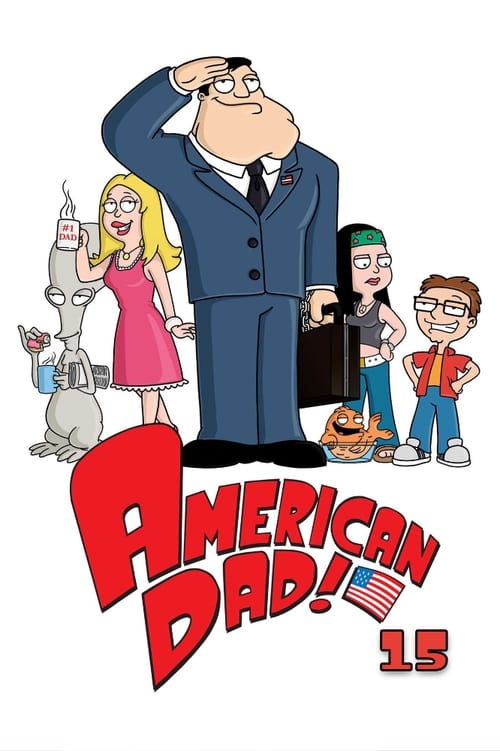
American Dad!
Season 15 Analysis
Season Overview
No specific overview for this season.
Season Review
Categorical Breakdown
The main political themes focus on the perennial conflict between Stan's conservatism and Hayley's activism, such as the episode where Hayley successfully organizes a strike at the CIA, but the political action is immediately warped and subverted by Stan's personal, self-serving agenda. Race and ethnicity are not central to any plot, and characters are primarily defined by their absurd personalities and self-interest rather than immutable characteristics.
Satire is heavily aimed at Stan's intense, often unthinking American patriotism and his blind faith in government institutions like the CIA. The narrative constantly frames Western (American) ideals as a source of paranoia, incompetence, and self-delusion for Stan, but this targets the character's flaws and the absurdity of the institutions, not a foundational evil or civilizational self-hatred.
Francine's character arc is centered on her struggle to find fulfillment and an identity outside of being a housewife and mother, shown through plots where she takes on new, ambitious roles like a bodybuilder or an aggressive career woman. While this touches on the anti-natalist/anti-family dynamic, the plots are played for extreme chaos and parody, leading to Francine becoming absurd or mean, which undercuts any serious 'Girl Boss' endorsement.
The show contains no clear sexual ideology or lecturing on gender theory. Sexual fluidity is present solely through the alien Roger's hundreds of personas and his amoral relationships, which serve as a running gag and a vehicle for absurd plots, not a deconstruction of the nuclear family as an oppressive structure. One episode satirizes the creepiness of 'purity balls,' but this critiques conservative sexual repression, not the concept of normative family itself.
The season contains a sharp satire of an extreme religious social trend, the father-daughter purity ball, portraying it as a bizarre, controlling, and sexually confused practice, which Stan only joins to avoid a difficult conversation. This mocks religious hypocrisy and social control. Another episode, 'Santa, Schmanta,' satirizes the commercialism of holidays and religious competition through a ridiculous plot about Roger converting to Judaism, maintaining the show's general moral relativism and spiritual vacuum through comedy.