The Office
Season 6 Analysis
Season Overview
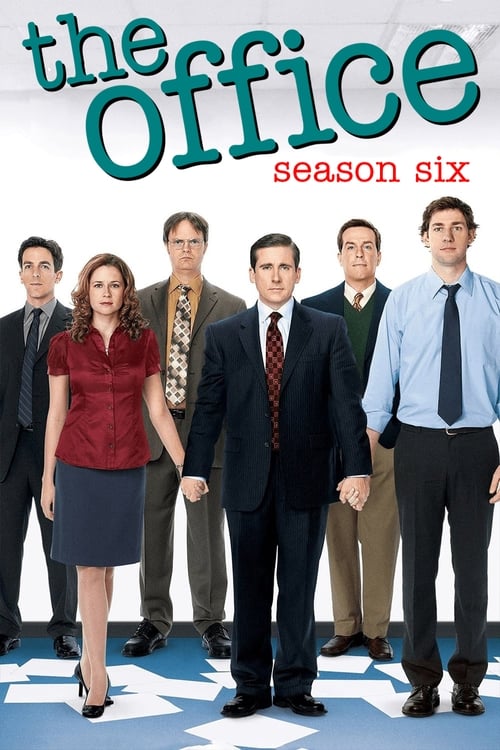
In Season 6, the crew faces romances, marriage, parenthood, new corporate ownership, Darryl’s rise to middle management, and a ball-busting new boss.
Season Review
Categorical Breakdown
One minority character earns a promotion from the warehouse to the office, which is depicted as a deserved professional achievement. An episode uses a 'minority executive program' as the basis for a scheme, satirizing tokenism where one manager cynically attempts to get a malleable minority co-worker into the program. The dialogue uses offensive language to mock the speaker’s own politically correct aspirations, highlighting his ignorance, not a systemic problem.
The season's major events are rooted in local, small-town American life with the wedding and the welcoming of a new baby into the main family unit. The conflict centers on the mundane struggle of a traditional paper company's survival against a new corporate buyout. There is no narrative thread criticizing or deconstructing Western civilization or American heritage.
The core A-plot revolves around the establishment of a traditional nuclear family through marriage and the celebration of the birth of a child, which is presented as a positive, defining fulfillment for the female lead. The new corporate CEO is a powerful woman, a 'ball-busting' executive who is competent but not an unrealistic, instantly perfect Mary Sue. Male characters are routinely incompetent in their managerial roles, but this is consistent with the show's long-standing comedic premise.
The one established gay character is present but is not the center of any major plot or political lecture. The narrative's romantic focus is entirely on traditional, male-female pairings (Jim and Pam, Andy and Erin). No themes of sexual ideology or gender theory are introduced into the narrative structure.
An episode focuses on the office Christmas party where a character attempts to play Jesus in an effort to regain control over the celebration, using the religious figure for purely self-serving, cringe-comedy purposes. This mocks the character's ego and inappropriate behavior in a corporate setting. The show does not portray traditional religion as inherently evil, and the morality of major plot points, such as fidelity, is treated as objectively good/bad within the story’s framework.