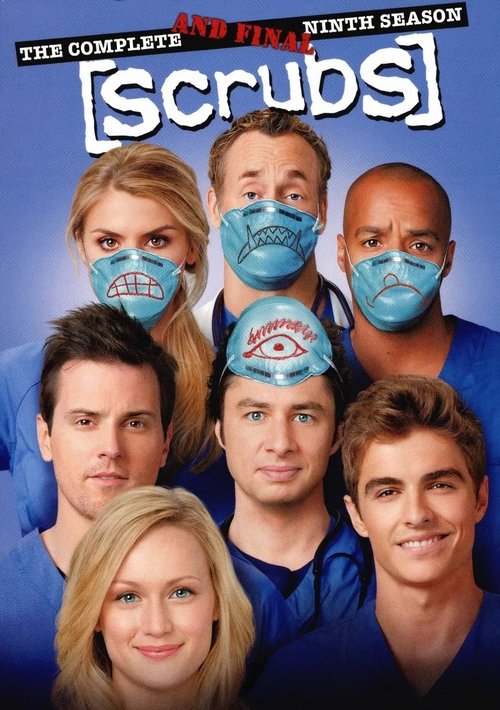
Scrubs
Season 9 Analysis
Season Overview
Our favorite docs are back and nothing has changed. Okay, a lot has changed. J.D. is back as a teacher at the all-new Sacred Heart. The old hospital was ripped down and rebuilt on the Winston University med school campus. Told you things have changed. As J.D. walks through campus, he tells us via his patented voiceover that he hopes to find a way to make everything feel fresh. CUE THE NEW NEWBIE!
Season Review
Categorical Breakdown
The narrative introduces a diverse group of students where ethnicity and background are prominent character traits. The primary antagonist, Cole, is portrayed as a caricature of wealthy white entitlement, gaining his position through family connections rather than skill. While the show doesn't explicitly lecture on intersectionality, it uses these identity markers as the primary basis for its social dynamics and conflict.
The series shows no hostility toward Western civilization or American institutions. The plot focuses on the prestige of medical education and the continuation of the Sacred Heart legacy. It respects the professional standards of the hospital and university systems without framing them as fundamentally corrupt or racist.
The show replaces the male protagonist with a female lead who adopts his personality and role. Female characters like Denise are depicted with traditionally masculine aggression and emotional detachment, while male characters are frequently portrayed as bumbling, vain, or incompetent. It avoids the 'Girl Boss' trope by showing Lucy's flaws, but it actively de-emphasizes traditional male authority.
The season continues the recurring 'bromance' jokes between J.D. and Turk, utilizing homoerotic subtext for comedic effect. It does not feature prominent queer theory or gender ideology storylines. The focus remains on heterosexual relationship drama among the student body and established couples like Turk and Carla.
Dr. Cox remains the central mentor figure and is an outspoken atheist who views the world through a lens of cold logic and science. The season lacks the spiritual depth or characters of faith that provided balance in earlier years. The show treats life and death as purely medical and material events, leaving a spiritual vacuum in the narrative.